China Leads Race to Create Dexterous Robotic Hands for Advanced AI
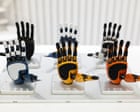
Companies in China are intensely focused on solving one of robotics' most significant challenges: replicating the dexterity of human hands. This pursuit is central to the development of 'embodied AI,' aiming to transform humanoid robots from mere novelties into genuinely useful tools. Human hands, with their intricate network of nerves and remarkable flexibility, are incredibly complex, enabling a vast range of tasks that require sophisticated neurological control and precise movements. Despite millennia of human ingenuity, no machine has yet successfully matched the capabilities of the human hand. However, with the rapid advancements in artificial intelligence, several companies, particularly in China, believe they are on the verge of achieving this breakthrough. The success in creating functional robotic hands is seen as the key to unlocking the full potential of humanoid robots across various applications.
The drive to create human-like robotic hands signifies a critical inflection point in AI and robotics, moving beyond purely computational intelligence to embodied intelligence. This development is driven by the economic incentive to create robots capable of performing complex manual tasks, thereby expanding their utility in manufacturing, logistics, and potentially domestic settings. The challenge lies not just in mechanical engineering but in the integration of advanced AI for real-time sensory feedback and motor control, mirroring human proprioception and fine motor skills. Future success in this domain will likely depend on breakthroughs in materials science, sensor technology, and sophisticated AI algorithms that can learn and adapt to unpredictable environments, ultimately shaping the human-robot interaction landscape over the next decade.
AI-generated to prompt reflection — not editorial opinion, not advice, not a statement of fact. How this works.