China-Led AI Alliance of 29 Nations Challenges US Dominance
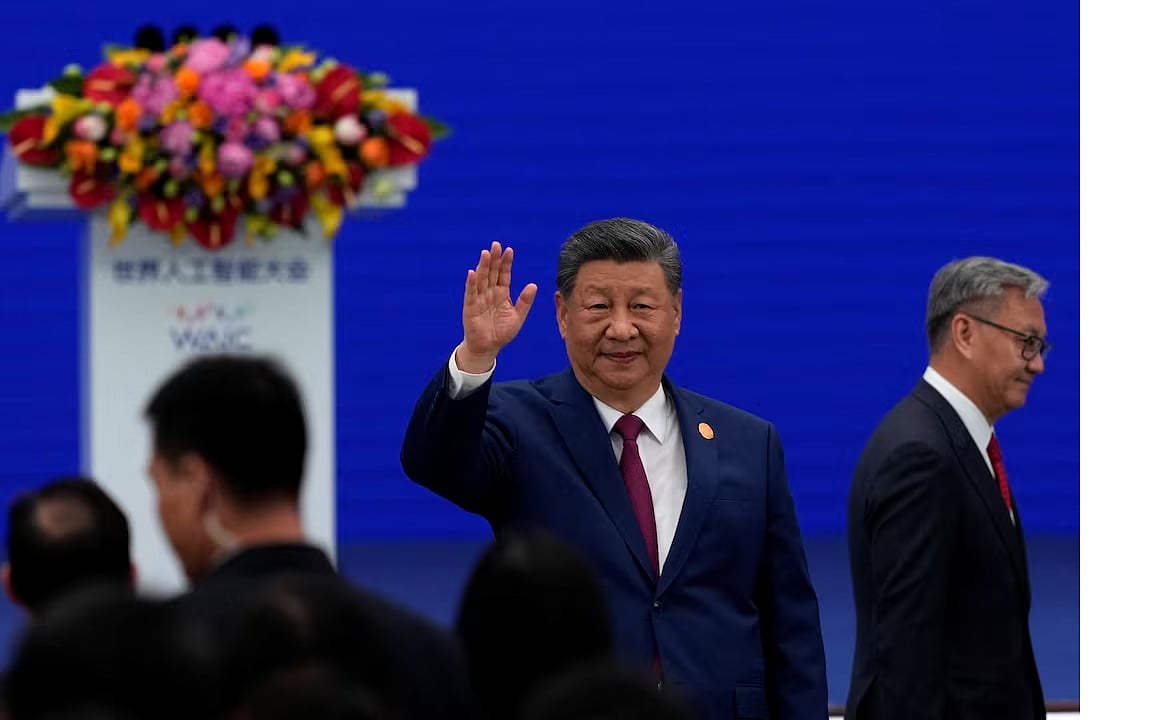
Shanghai hosted the World Artificial Intelligence Conference (WAIC) from July 17th, a four-day event signaling China's growing influence in both technology and geopolitics. Chinese President Xi Jinping urged participating nations to boost AI cooperation, cautioning against any single country dominating the field, a statement widely interpreted as a challenge to the United States. The conference showcased advanced Chinese AI technologies aiming to rival US capabilities, with China seeking to position itself as a leader in the rapidly evolving AI landscape and counter American influence.
Prior to the WAIC, China announced the formation of the World Artificial Intelligence Cooperation Organization (WAICO) on July 16th, with 29 founding member nations signing the agreement in Shanghai. This intergovernmental organization aims to strengthen international AI cooperation and develop safe and beneficial AI policies globally. Notable founding members include Indonesia, Brazil, Malaysia, South Africa, Senegal, Russia, and Pakistan, representing key countries from the Global South. Analysts suggest Beijing may leverage WAICO to influence AI policymaking within the United Nations.
Artificial intelligence is a cornerstone of China's industrial strategy, supported by significant investment in domestic AI infrastructure, from chip manufacturing to consumer applications. This has intensified the US-China "chip war," a competition for control over chip-dependent technologies like advanced weaponry and AI systems. Despite lagging behind the US in acquiring cutting-edge semiconductors, China leads in the capacity to operate large data centers for AI model training and possesses dominance in rare earth mineral production crucial for chip manufacturing. Abundant low-cost electricity further benefits China, with its power generation already exceeding the US's by more than double, a gap expected to widen with state-led infrastructure expansion.
President Xi emphasized a "people-centric" approach to AI development, stressing the need for robust regulations and safeguards to ensure human control over AI. He also called for equitable access to AI capabilities for developing nations, aiming to prevent new forms of historical inequality. China's initiative to form WAICO and lead global AI governance reflects a strategic effort to shape international norms, particularly as the US appears to be withdrawing from global cyber and AI policy discussions. This move could bolster Beijing's position at the UN, especially with support from middle and low-income countries aligned with China.
China's establishment of the World Artificial Intelligence Cooperation Organization (WAICO) and its assertive role at the World Artificial Intelligence Conference (WAIC) signal a strategic bid to reshape global AI governance. By rallying a coalition of 29 nations, primarily from the Global South, Beijing aims to counter the perceived US-led technological hegemony and promote a state-centric model of AI development and regulation. This initiative leverages China's significant investments in AI infrastructure, including data centers and rare earth minerals, and its abundant energy resources. The move can be interpreted as an attempt to influence international standards and norms in AI, potentially creating a bifurcated global AI ecosystem. As the US focuses on national security restrictions, China is actively seeking to fill the vacuum in global AI diplomacy, framing its approach as one of equitable access and international cooperation, while simultaneously advancing its own technological and geopolitical interests in the critical AI era.
AI-generated to prompt reflection — not editorial opinion, not advice, not a statement of fact. How this works.