China's 66 Billion Tree Project: Rapid Growth, Temporary Gains
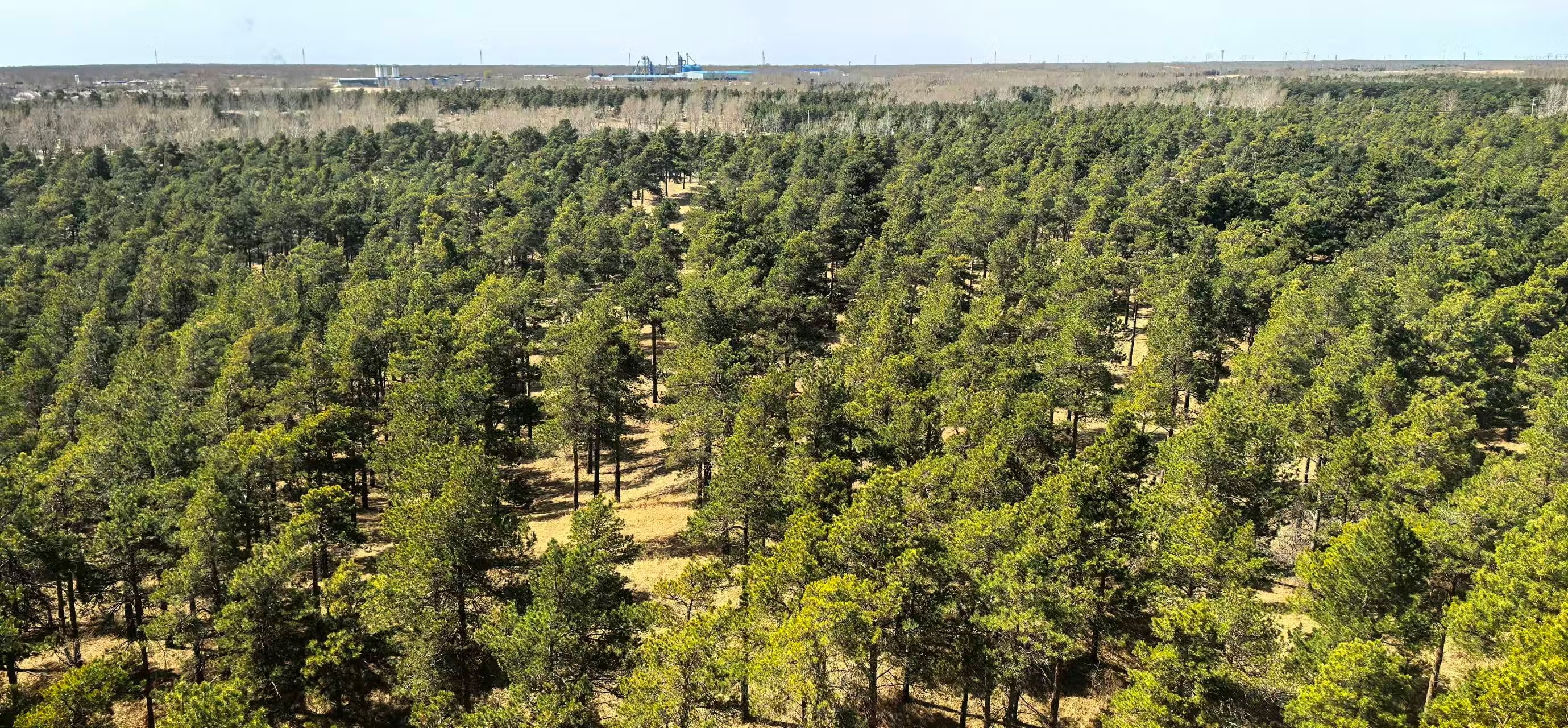
Since 1978, China has undertaken a monumental reforestation effort, planting approximately 66 billion trees as part of the "Great Green Wall" initiative. This ambitious project aims to combat desertification by halting the advance of the Gobi and Taklamakan deserts, which were encroaching on northern China's grasslands at a rate of over 2,600 square kilometers annually. The initiative's success has significantly increased forest cover in affected regions from 5% in 1978 to 14% in 2023, leading to reduced dust storms and improved air quality in major cities. China plans to plant an additional 34 billion trees by mid-century, further transforming the landscape.
Recent research published in Geophysical Research Letters reveals that planted forests exhibit faster leaf area growth in response to rising CO₂ levels compared to natural forests. Satellite data analyzed by a team led by Yuhang Luo from Peking University Shenzhen Institute showed a 66% faster increase in leaf area index for planted forests. While younger age and intensive management, including the use of fast-growing species like eucalyptus and poplar, contribute to this rapid growth, the advantage appears to be temporary, peaking around 30-40 years of age.
This rapid growth, though beneficial for short-term carbon capture, may not translate to long-term carbon storage or resilience, where natural forests maintain a slower but steadier development. The study highlights limitations in current climate models that do not adequately differentiate between natural and planted forests, potentially overestimating their carbon sequestration capacity. While the scale of China's project is exceptional, with planted forests covering over 90 million hectares in southern China and the Taklamakan green belt acting as a net carbon sink, experts like Luo emphasize the need for more strategic planting and management to optimize future large-scale reforestation efforts.
China's "Great Green Wall" exemplifies large-scale environmental intervention, demonstrating the capacity to alter landscapes and mitigate desertification. The observed accelerated growth in planted forests, while seemingly positive for carbon capture, highlights a critical distinction between short-term biomass accumulation and long-term ecological stability. This phenomenon suggests that current climate models may require refinement to account for the distinct dynamics of managed versus natural ecosystems. The temporary nature of this growth advantage underscores the importance of sustainable forest management practices, emphasizing that while afforestation can be a valuable tool, it should complement, not replace, the preservation of mature, natural forests for enduring carbon sequestration and biodiversity. Future climate strategies must therefore balance rapid intervention with long-term ecological resilience, considering the full life cycle and systemic contributions of different forest types.
AI-generated to prompt reflection — not editorial opinion, not advice, not a statement of fact. How this works.