China's 66 Billion Trees Planted Differ From Natural Forests, Study Finds
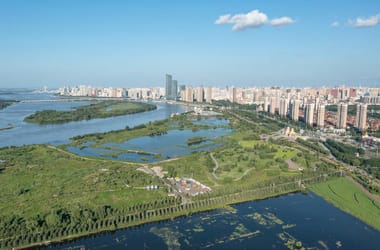
Researchers from Peking University have discovered that forests established through China's massive tree-planting initiatives behave differently from naturally occurring ones. This finding suggests that current ecological models used to understand forest ecosystems may need significant revision. The scale of China's afforestation efforts, involving the planting of 66 billion trees, has been a prominent environmental policy. However, the study indicates that the structure and function of these planted forests diverge from those that develop organically. This distinction is crucial for accurately assessing the true ecological benefits and impacts of large-scale reforestation projects. The research calls into question the assumptions underlying many environmental strategies that rely on simplified representations of forest dynamics. Understanding these differences is vital for future conservation and climate change mitigation efforts, as the effectiveness of planted forests in providing ecosystem services like carbon sequestration and biodiversity support may be overestimated if their unique characteristics are not accounted for. The study emphasizes the need for more nuanced ecological modeling that can differentiate between natural and artificial forest systems.
The discrepancy between planted and natural forests highlights a critical challenge in large-scale ecological interventions. While China's ambitious afforestation program has achieved significant land cover changes, the study by Peking University suggests that the ecological functionality of these new forests may not mirror natural ecosystems. This points to a need for refining our understanding of ecosystem dynamics, moving beyond simple metrics like tree count to encompass complex interactions and long-term stability. Future environmental policies should consider these findings to ensure that reforestation efforts yield the most effective and sustainable ecological outcomes, aligning with the long-term goals of biodiversity conservation and climate resilience in an increasingly AI-driven world.
AI-generated to prompt reflection — not editorial opinion, not advice, not a statement of fact. How this works.