China's AI Ecosystem Achieves Full Training Closure on Domestic Chips
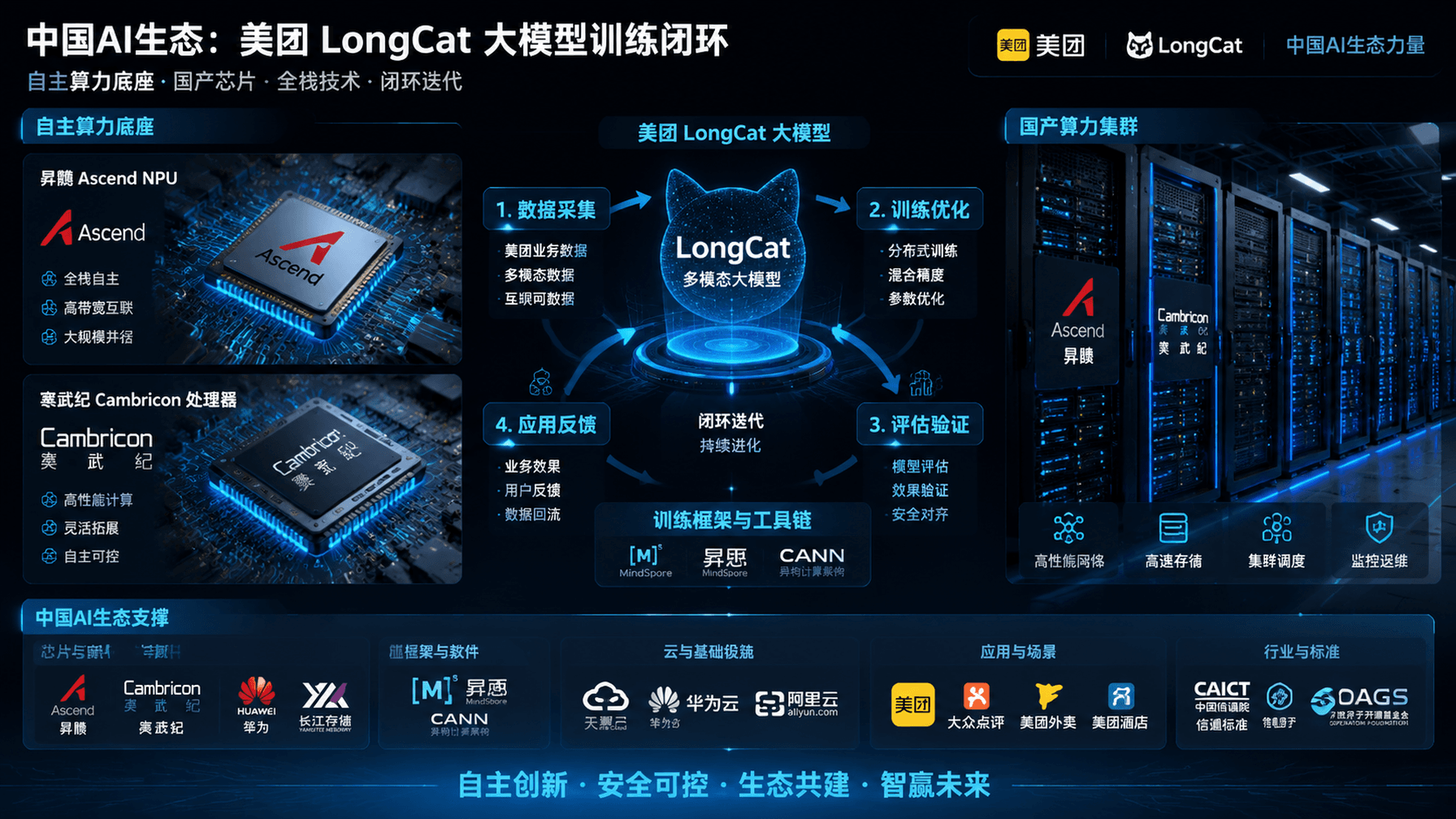
Meituan's LongCat-2.0 represents a significant advancement in China's artificial intelligence landscape, having been trained exclusively on domestically produced chips. This development signifies the achievement of "full training closure" within the country's AI ecosystem, meaning that the entire process of developing and training AI models can now be accomplished using Chinese-made infrastructure. This milestone moves China's AI development from a focus on compute substitution, where domestic hardware might have been used to replace foreign components, to a more self-sufficient model. The success of LongCat-2.0 on this homegrown infrastructure highlights the growing capabilities and independence of China's AI sector. This transition suggests a strategic shift towards building a complete and robust domestic supply chain for AI technologies, reducing reliance on international hardware and software. The implications of this achievement are far-reaching, potentially impacting global AI development and competition.
The achievement of "full training closure" on domestic chips in China's AI ecosystem, as exemplified by Meituan's LongCat-2.0, signals a strategic maturation beyond mere hardware substitution. This development indicates an increasing capacity for end-to-end AI model development within China's borders, potentially reducing external dependencies and fostering domestic innovation. Over the next decade, this self-sufficiency could reshape global AI supply chains and competitive dynamics, prompting a re-evaluation of international collaboration and market access. The long-term implications will depend on the continued scalability, cost-effectiveness, and performance of these domestic AI infrastructures compared to global alternatives.
AI-generated to prompt reflection — not editorial opinion, not advice, not a statement of fact. How this works.