China's Caviar Giant Xunlong Technology IPOs Amidst Market Success and Underlying Risks
Hangzhou Qiandao Lake Xunlong Technology, the world's largest caviar producer, successfully listed on the Hong Kong Stock Exchange on June 30, 2026. The company's IPO was met with strong investor enthusiasm, opening at HK$103, a 36.42% increase from its issue price of HK$75.5, and reaching HK$114 by market close, a 50.99% gain. During its public offering, Xunlong Technology saw an oversubscription of 2134.81 times, with eight cornerstone investors, including BlackRock and Baillie Gifford, committing approximately HK$615 million. Despite its impressive market debut, questions linger about how a company with less than 800 million yuan in annual revenue can command such high valuations and whether it has truly achieved 'caviar freedom' for Chinese consumers.
Xunlong Technology, founded in 2003 by Wang Bin, revolutionized the caviar industry by focusing on large-scale, efficient aquaculture and production. The company's brand, 'Kaluga Queen,' became synonymous with high-quality, domestically produced caviar. By significantly improving breeding techniques, such as identifying sturgeon sex earlier and increasing egg-laying rates, Xunlong Technology has become the global leader in caviar production. Currently, the company operates eight major breeding bases with a sturgeon stock of 14,900 tons, holding the world's largest sturgeon reserves. Globally, one in every three bottles of caviar originates from Xunlong Technology, and the company accounts for 36.1% of the global market share with 292 tons sold in 2025. China's total caviar output reached 436.8 tons in 2025, with Xunlong Technology being the primary driver of this success.
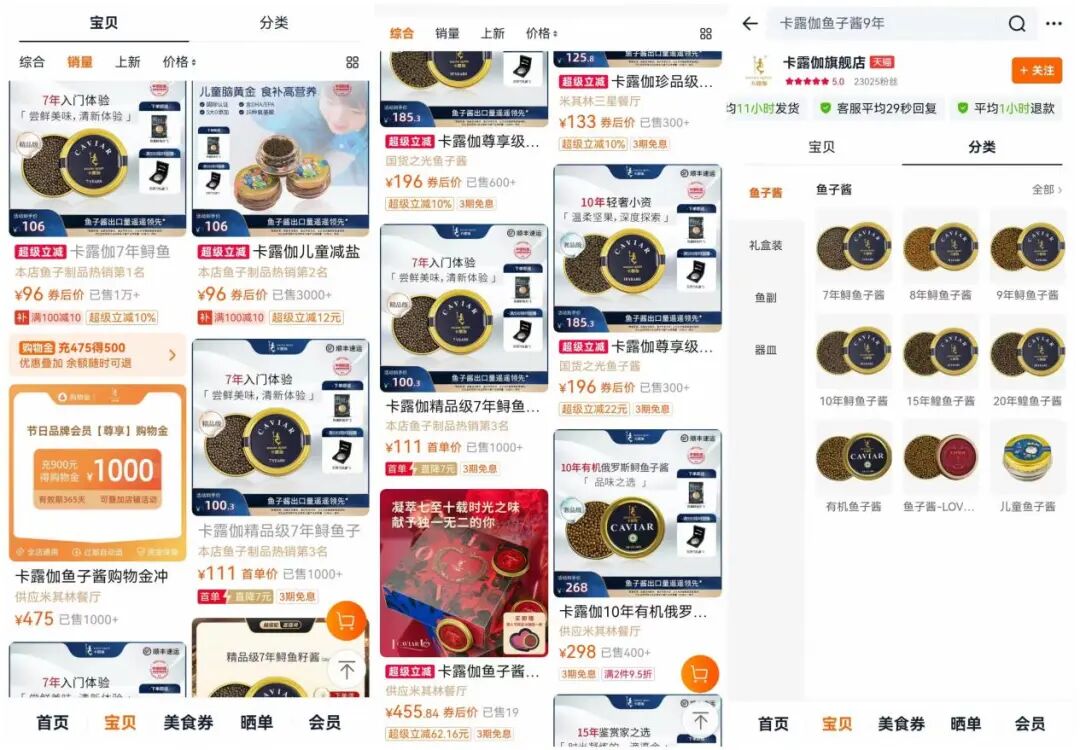
However, the company faces significant structural challenges. Its revenue is overwhelmingly dependent on caviar, which accounted for 90.8% of its income in 2025, with over 80% from just two sturgeon species. A substantial 83.8% of its revenue in 2025 came from overseas markets, but nearly 70% of this was through third-party contract manufacturing, indicating a lack of brand recognition and premium pricing power. The company's own brand, 'Kaluga Queen,' primarily targets domestic e-commerce and airline first-class cabins, contributing only 31.4% of total revenue. Furthermore, domestic revenue has declined, highlighting limited consumer acceptance in China, where caviar is still viewed as a luxury rather than a staple. The company's biological assets, valued at 1.749 billion yuan (over 57% of total assets), are also a significant risk, relying on subjective valuations and susceptible to environmental factors, as seen in a previous instance where flooding caused a 0.25 billion yuan reduction in asset value and a sharp drop in gross profit margin.
Xunlong Technology's successful IPO highlights the burgeoning global demand for caviar and China's significant role in its production. The company's ability to scale aquaculture and production efficiently, coupled with advancements in breeding technology, has positioned it as a market leader. However, the IPO's valuation appears to be heavily influenced by the aspirational growth of the caviar market and the company's dominant production scale, rather than its current brand equity or diversified revenue streams. The heavy reliance on contract manufacturing for overseas markets suggests a potential vulnerability to price negotiations and a limited ability to capture higher margins. Future success will likely depend on Xunlong Technology's strategic shift towards building its own brand recognition and premium pricing power, alongside cultivating domestic consumer acceptance. The significant valuation of biological assets, while a reflection of future potential, also introduces considerable volatility and valuation risk, necessitating robust risk management and transparent reporting to maintain investor confidence and avoid the pitfalls of past agricultural asset valuation controversies.
AI-generated to prompt reflection — not editorial opinion, not advice, not a statement of fact. How this works.