China's Chongqing: A Motorcycle Manufacturing Hub Bustles with Production
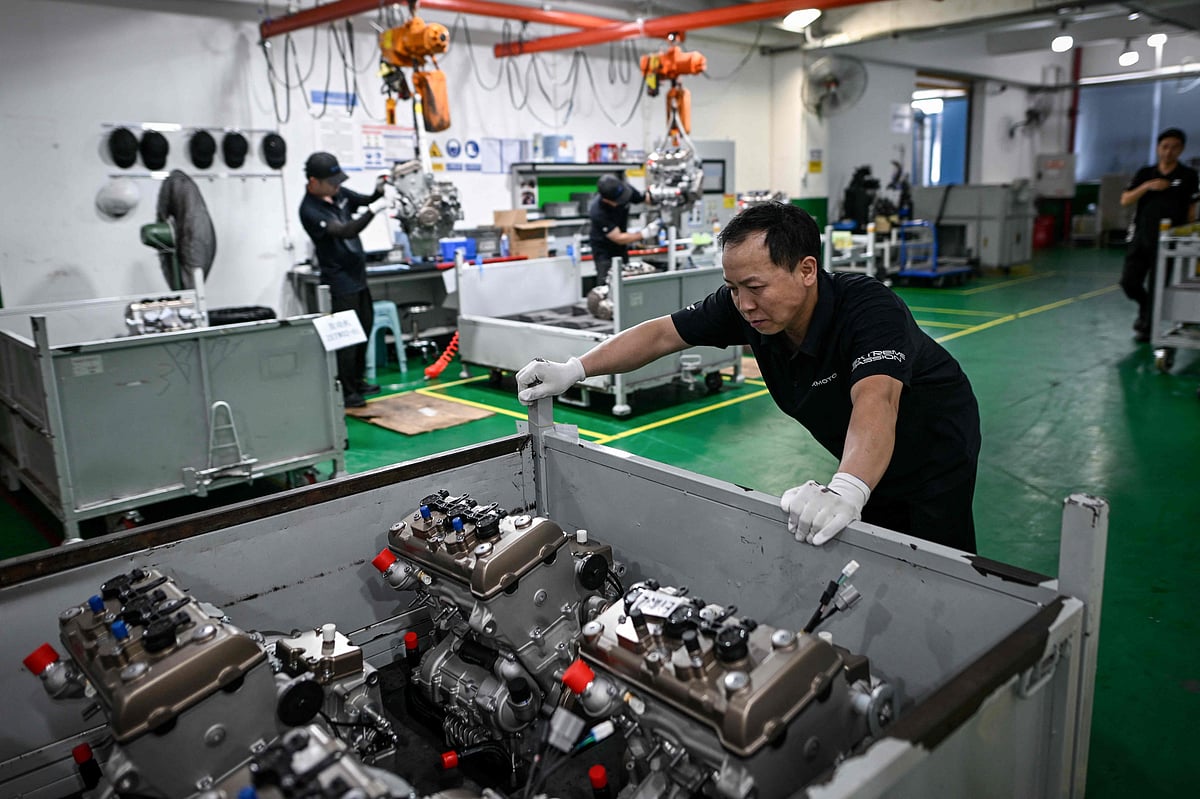
Chongqing, a city nestled in the mountainous regions of southwestern China, is not only a tourist destination but also a major center for motorcycle production. Since the establishment of the state-owned Jialing factory in 1979, the city has transformed into a significant industrial hub. Currently, more than one-third of all motorcycles produced in China originate from Chongqing. Images from the ZXmoto and Xinere factories depict workers diligently engaged in every stage of production, from engine manufacturing and assembly to testing and final output. Workers are shown transporting motorcycle engines between departments via trolleys at the ZXmoto factory on July 20, 2026. At the same facility, employees are busy assembling various components of motorcycle engines and working on the final assembly lines. At the Xinere factory, workers are preparing for motorcycle assembly and are seen working on motorcycles lined up for assembly on July 21, 2026. The ZXmoto factory on July 20, 2026, shows workers completing the final details on nearly finished motorcycles and conducting assembly. Workers are also depicted walking past rows of assembled motorcycles at the Xinere factory on July 21, 2026, and preparing to test completed motorcycles at the ZXmoto factory.
Chongqing's prominence as a motorcycle manufacturing center highlights China's strategic industrial development, leveraging specialized regional capabilities to dominate global production. The intensive activity observed in factories like ZXmoto and Xinere underscores a production model focused on efficiency and scale, likely driven by both domestic demand and export markets. This concentration of manufacturing raises questions about supply chain resilience and the long-term sustainability of such industrial clusters, particularly in the context of evolving global trade dynamics and potential geopolitical shifts. Future considerations may involve diversification of production locations and a greater emphasis on technological innovation to maintain a competitive edge in the rapidly advancing automotive sector.
AI-generated to prompt reflection — not editorial opinion, not advice, not a statement of fact. How this works.