China's Declining Marriage Rate Sparks Government Concern Amid Demographic Crisis
The declining number of marriages among young Chinese people has become a significant concern for the government, moving beyond a mere behavioral shift. As China grapples with an aging population and a falling birthrate, Beijing views the formation of new families as crucial to mitigating a demographic crisis that threatens the nation's economy in the coming decades. This context explains the persistence of traditions like Shanghai's marriage market, where parents advertise their single children in search of partners, though these practices are losing traction with a generation prioritizing independence and personal fulfillment.
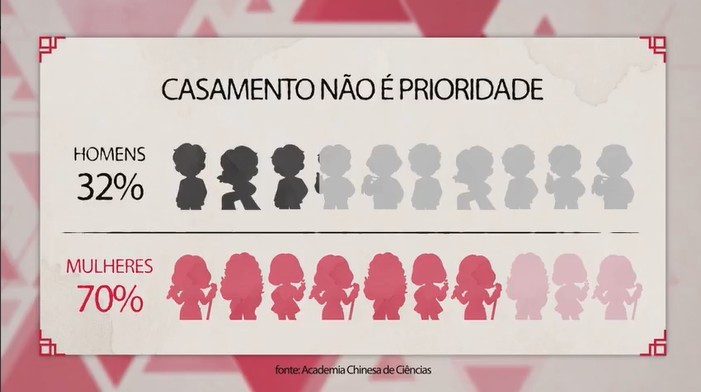
A survey indicates that 70% of Chinese women born after 1990 do not consider marriage a priority, with 32% of men also stating it's no longer their top life goal. This trend poses a challenge to the Chinese government, which faces a continuous population decline; projections suggest China could lose a population equivalent to France's by 2035, impacting its workforce and straining its pension system. Increased female independence, driven by greater access to the job market and financial autonomy, is a key factor, leading many women to reject marriage as a mandatory life stage. For those born after 2000, personal compatibility is increasingly valued over wealth or financial stability, with some women preferring to remain single if they don't find a suitable partner.
The legacy of the one-child policy (1980-2015) also contributes to an imbalance in the marriage market, creating a deficit of millions of women of marriageable age due to selective abortions or relinquishments of female infants. The government's attempts to encourage marriage, such as labeling unmarried women over 27 as "left-behind women," are often perceived by young Chinese women as reinforcing outdated social pressures. While the government seeks to boost marriages and births to counter the demographic crisis, a growing number of young people are prioritizing freedom, career, and quality of life over traditional expectations.
The Chinese government's concern over declining marriage rates highlights a systemic tension between state demographic objectives and evolving individual aspirations. As the nation navigates the economic implications of a shrinking workforce and an aging population, policies aimed at encouraging family formation are encountering a generation that increasingly values personal autonomy, career development, and quality of life over traditional marital expectations. This generational shift, amplified by greater female independence and financial empowerment, suggests that top-down incentives may prove insufficient to reverse deeply ingrained behavioral changes. The long-term challenge for China will be to reconcile its demographic goals with the societal realities of a more individualistic and self-directed populace, potentially requiring a recalibration of economic and social support systems beyond traditional family structures.
AI-generated to prompt reflection — not editorial opinion, not advice, not a statement of fact. How this works.