China's 'Great Green Wall' Transforms Desert into Carbon Sink
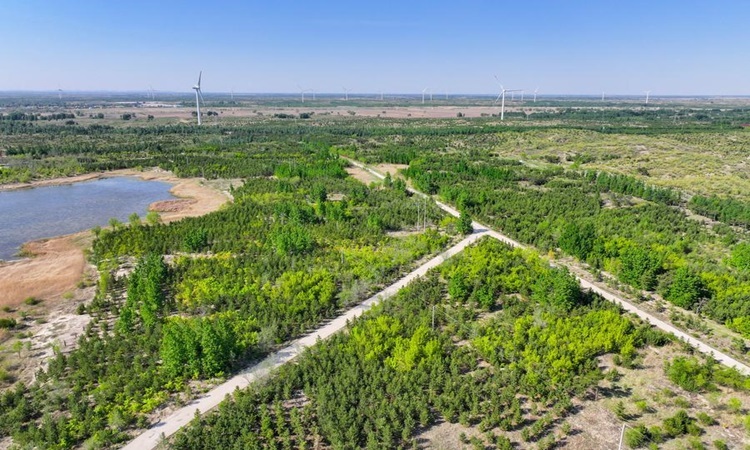
China's "Great Green Wall" initiative has achieved remarkable success by planting over 66 billion trees. These trees exhibit a growth rate faster than natural forests, primarily due to their enhanced capacity for absorbing carbon dioxide. The project aims to combat desertification and create a vast carbon sink, effectively turning arid desert landscapes into areas that actively sequester atmospheric carbon. This large-scale afforestation effort represents a significant investment in ecological restoration and climate change mitigation. The accelerated growth of these planted trees highlights the potential for strategic land management to yield substantial environmental benefits. By increasing vegetation cover, the project also contributes to improving local biodiversity and soil stability in previously barren regions. The initiative underscores China's commitment to large-scale environmental projects aimed at addressing both domestic ecological challenges and global climate concerns.
The 'Great Green Wall' project demonstrates a state-led approach to ecological engineering, leveraging afforestation as a primary tool for carbon sequestration and desertification control. While the scale of tree planting and reported CO2 absorption rates are significant, evaluating the long-term ecological sustainability and biodiversity impact of such monoculture-heavy initiatives is crucial. Future assessments should consider the resilience of these planted forests to climate change, water resource management in arid regions, and the potential for unintended consequences on local ecosystems. The project's success prompts a broader discussion on the efficacy of large-scale, human-directed environmental interventions versus natural ecological processes in achieving climate goals.
AI-generated to prompt reflection — not editorial opinion, not advice, not a statement of fact. How this works.