China's 'Great Green Wall' Trees Grow Unusually Fast in Desert Afforestation Project
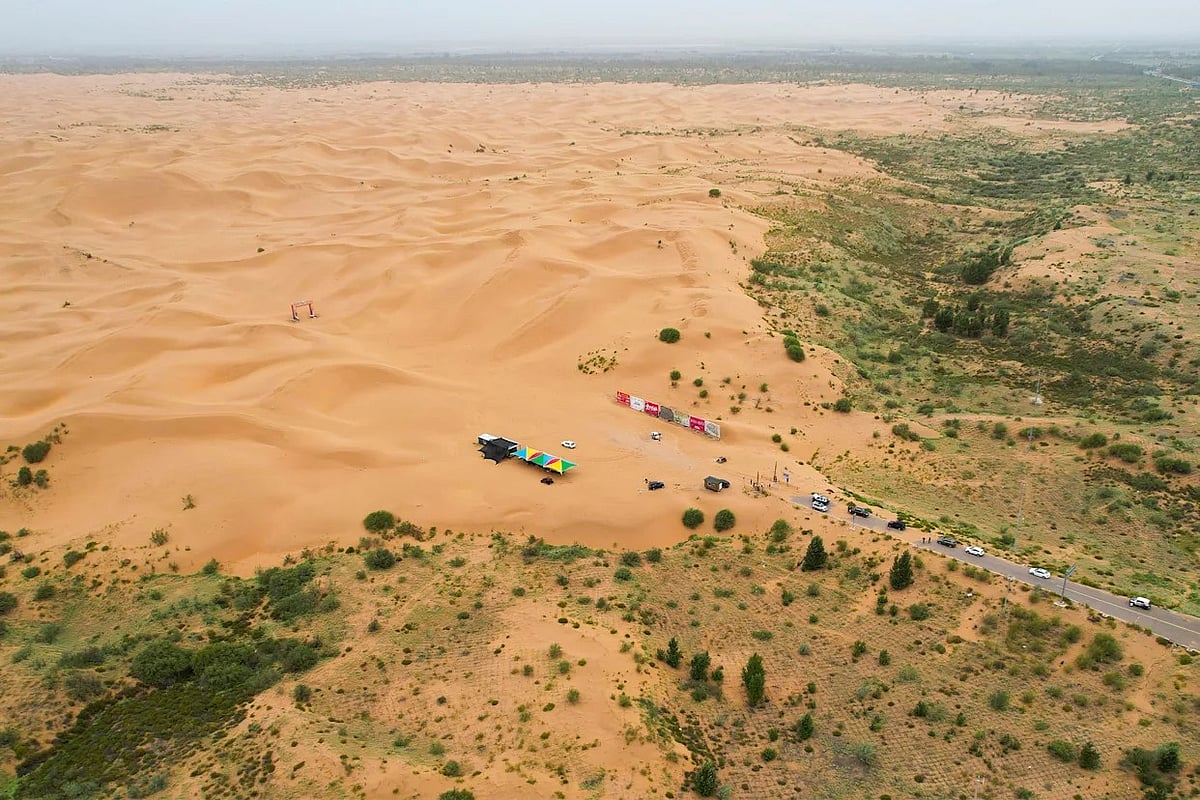
Researchers have observed that trees planted as part of China's 'Great Green Wall' project in desert regions are growing significantly faster than typical forest trees. This ambitious afforestation initiative aims to combat desertification and improve environmental conditions. Scientists are investigating the rapid growth, with preliminary theories suggesting a connection to the increasing levels of carbon dioxide in Earth's atmosphere. The project, which involves planting billions of trees, is a massive undertaking by China to reclaim arid land. The accelerated growth rate has surprised many, prompting further scientific inquiry into the underlying biological and environmental factors. Understanding this phenomenon could have implications for future large-scale ecological restoration efforts globally. The specific quantity of trees planted is stated as 66 billion.
China's extensive afforestation program, including the 'Great Green Wall' initiative involving 66 billion trees, presents a complex case study in ecological engineering. While the rapid growth observed is superficially positive, it warrants careful examination of the underlying mechanisms and long-term sustainability. Accelerated growth, potentially linked to elevated atmospheric CO2, may indicate an ecosystem under stress or adapting in ways not yet fully understood. Future-proofing such projects requires evaluating their resilience to climate change, biodiversity impact, and water resource management. The initiative highlights the tension between ambitious environmental targets and the potential for unintended consequences in complex ecological systems, urging a balanced approach that prioritizes holistic ecosystem health over sheer scale.
AI-generated to prompt reflection — not editorial opinion, not advice, not a statement of fact. How this works.