China's 'Great Green Wall' Trees Outgrow Natural Forests
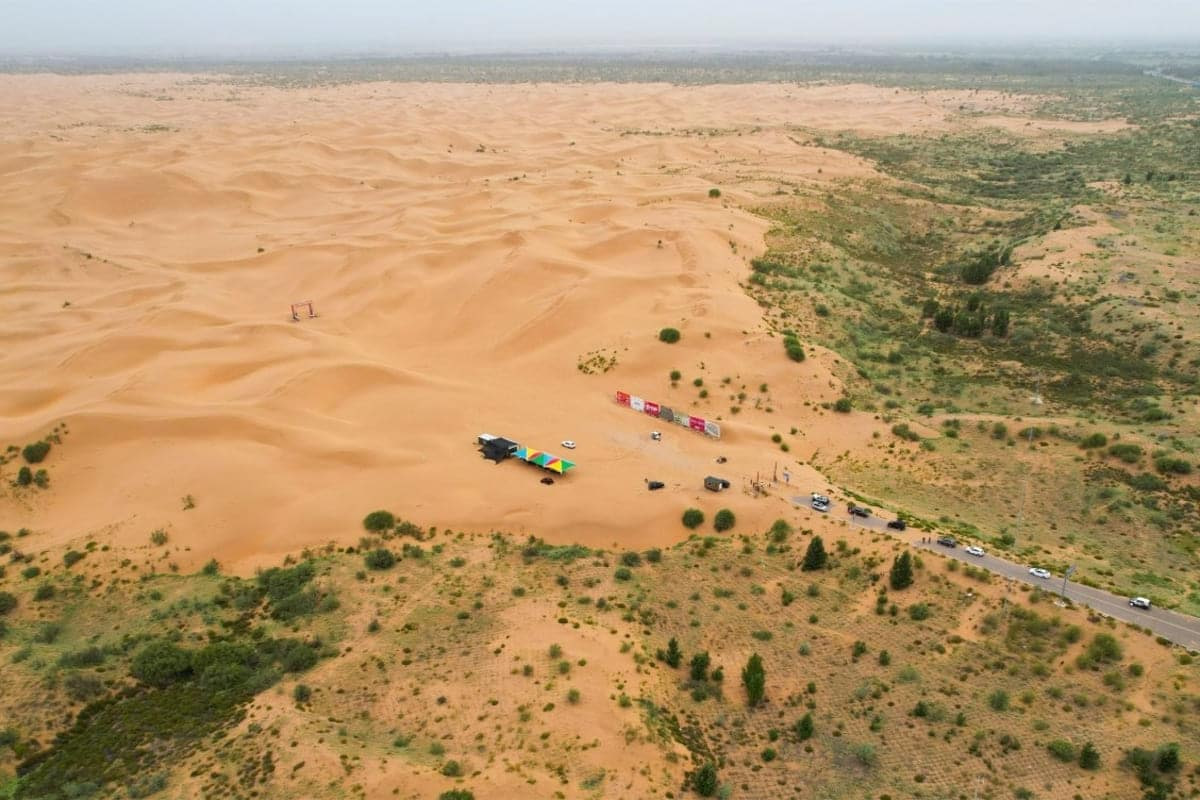
Trees planted as part of China's 'Great Green Wall' project, designed to combat desertification, have been observed to grow faster than trees in natural forests. Scientists suggest this phenomenon might be linked to how these artificial forests respond differently to rising atmospheric carbon dioxide levels. The initiative, aimed at reclaiming desertified land, involves extensive afforestation efforts across vast arid and semi-arid regions of China. Initial findings indicate that the managed and often monoculture plantations are exhibiting accelerated growth rates. This accelerated growth could have implications for carbon sequestration strategies and the overall ecological balance of the regions. Further research is needed to fully understand the long-term effects and sustainability of these human-created ecosystems. The project has been ongoing for decades, with significant investment and land allocation. The comparison between the growth rates of planted and natural forests provides valuable data for ecological modeling and climate change mitigation efforts.
The 'Great Green Wall' project demonstrates a human-driven approach to ecological restoration, highlighting the potential for engineered ecosystems to adapt rapidly to environmental changes like increased CO2. While accelerated growth in artificial forests may seem beneficial for carbon capture, it raises questions about long-term biodiversity, water resource management, and the resilience of monoculture plantations compared to natural ecosystems. The project's success warrants examination of the underlying mechanisms driving this differential growth, considering potential trade-offs between rapid biomass accumulation and ecological complexity. Future strategies may need to balance the immediate impact of afforestation with the development of more diverse and self-sustaining forest systems to ensure lasting environmental benefits.
AI-generated to prompt reflection — not editorial opinion, not advice, not a statement of fact. How this works.