China's Long March 10B Rockets Use Net System for Reusable Booster Recovery
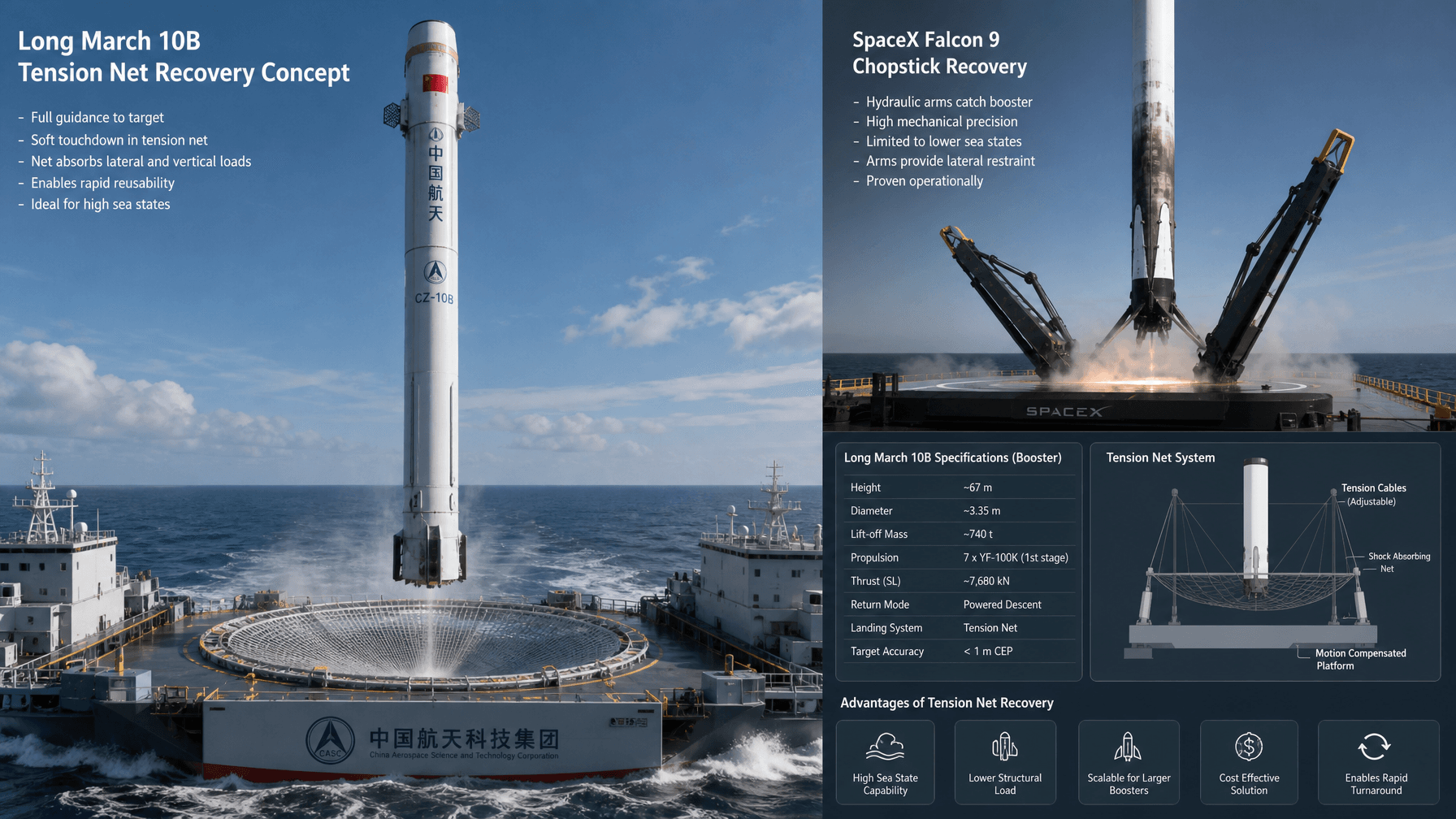
China's Long March 10B rocket is employing a novel net recovery system for its reusable boosters, diverging from SpaceX's "chopstick" arm method used for Starship. This Chinese system utilizes flexible capture technology, designed to offer greater tolerance for errors during the recovery process. The net approach is intended to provide a gentler handling of the booster upon capture. This innovation represents China's independent development of a reusable rocket recovery strategy. The Long March 10B's net system aims to ensure the safe and efficient retrieval of its boosters, a critical component for enabling cost-effective space launches. This development highlights a different engineering philosophy in achieving rocket reusability.
China's adoption of a net-based recovery system for its Long March 10B reusable rockets demonstrates a distinct engineering approach to booster retrieval. This method prioritizes flexibility and error tolerance, potentially offering advantages in handling dynamic capture scenarios. By developing an independent recovery technology, China is building its capacity for sustainable spaceflight operations. The divergence from SpaceX's "chopstick" system illustrates the varied technological pathways being explored globally to achieve rocket reusability, driven by differing design philosophies and operational requirements. This diversity in innovation is crucial for advancing the capabilities and economics of space access in the coming decade.
AI-generated to prompt reflection — not editorial opinion, not advice, not a statement of fact. How this works.