China's Markets Offer Stability, Attracting Investors Amid Global Volatility
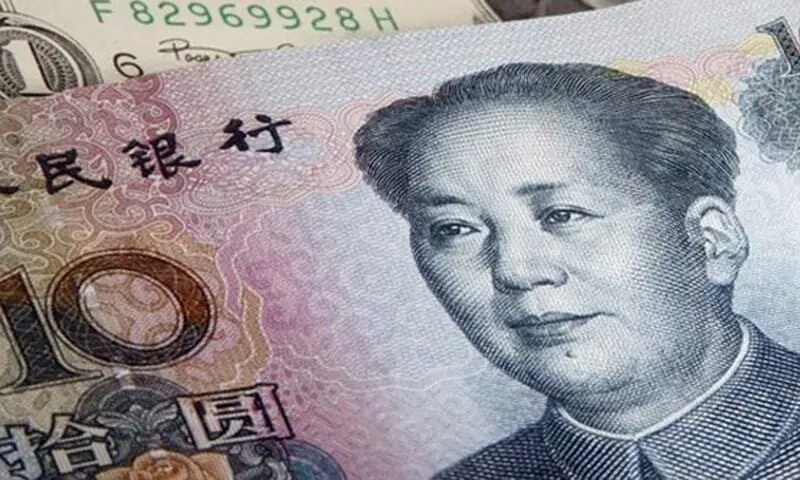
Investor sentiment towards Chinese assets is shifting, with China's markets demonstrating steady returns that contrast with global turbulence, including the Iran conflict and the AI boom. This divergence has positioned China as a hedge against volatility, drawing capital into its bond market and prompting interest in stocks with growth drivers independent of global trends. Christopher Hamilton, head of client investment solutions for Asia Pacific ex-Japan at Invesco, noted that China's role in portfolios is evolving from a simple emerging market allocation to a more sophisticated source of diversification. Since late February, China's bond market has shown remarkable strength, and the yuan has appreciated against the U.S. dollar, while mainland blue-chip stocks achieved nearly an 11% rise in the first half of the year in dollar terms. This performance, though lower than some Western markets, was achieved without the same dependence on AI enthusiasm or sensitivity to U.S. interest rate changes. Liu Gongrun, executive deputy director at the CEIBS Lujiazui International Institute of Finance, stated that Chinese assets are no longer solely evaluated based on short-term valuations, trading sentiment, or Federal Reserve policies. China's relative detachment from global market forces stems from an economy out of sync with global inflationary cycles and a stock market influenced by retail investors and policy-driven stability initiatives from regulators and state-backed entities. The yuan's 5.4% advance against the dollar over the past year, despite broad dollar strength and low yields, reflects robust exports and official efforts to foster gradual currency appreciation. Global banks are revising upward their year-end forecasts for the yuan. Foreign investors have returned to Chinese stocks and bonds, with BNY's Wee Khoon Chong citing relative safety and low volatility as key drivers. China's benchmark 10-year sovereign yields have fallen, contrasting with rising U.S. yields. May saw the first net foreign inflows into China's bond market in over a year, and foreign holdings of onshore A-shares increased significantly. However, some skeptics remain concerned about China's earnings growth compared to other Asian markets, its consumer market, and the property sector downturn, preferring other developed or emerging markets for diversification.
The observed divergence of Chinese financial markets from global trends, particularly during periods of geopolitical tension and technological frenzies, presents a compelling case study in portfolio diversification. This phenomenon suggests a potential recalibration of investment strategies, where China's unique economic cycle and policy-driven stability offer an alternative to traditional risk-on/risk-off assets. The narrative of China as a 'sandbag against volatility' highlights an evolving investor calculus, moving beyond simple growth allocations to a more nuanced appreciation of uncorrelated asset behavior. Future market structures may increasingly incorporate such distinct regional dynamics, prompting a re-evaluation of systemic risk models and the efficacy of globalized financial integration. Investors will need to navigate the inherent trade-offs between China's relative insulation and its distinct governance and market structures, considering long-term technological and geopolitical trajectories.
AI-generated to prompt reflection — not editorial opinion, not advice, not a statement of fact. How this works.