China's "Marriage Market": Parents Seek Partners for Adult Children
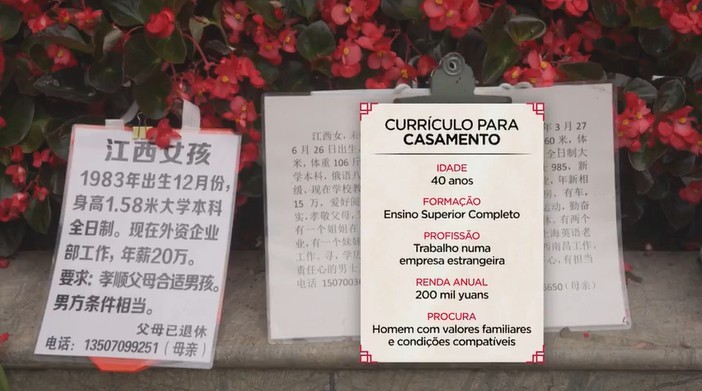
In Shanghai's People's Park, a unique tradition persists every Sunday: parents gather to find spouses for their unmarried children. These parents display "resumes" on umbrellas and boards, detailing their children's age, education, profession, annual income, assets, height, and desired qualities in a partner. Often, the adult children are not directly involved in this search, with parents taking the lead in promoting their profiles. The urgency to find a match typically intensifies when children approach their 30s. While some adult children are aware and wish to marry, the final decision remains theirs, as illustrated by one mother whose daughter knows about her participation in the market.
This high demand has spawned a professional matchmaking industry. Specialized agencies employ matchmakers who vet candidates and suggest potential pairings. One matchmaker shared that her own marriage, arranged through a newspaper ad 20 years ago, inspired her career. She now uses her experience to quickly assess profiles and identify compatible matches. For the older generation in Shanghai, financial stability, assets (such as a family fortune of 40 million yuan mentioned in one ad), and income are paramount criteria in choosing a partner, contrasting with a perceived prioritization of freedom and happiness among younger Brazilians.
Despite the popularity of dating apps in China, matchmaking agencies claim to offer a distinct advantage by pre-screening candidates and verifying information, thereby enhancing trust and authenticity. However, the industry is adapting to evolving youth attitudes. Agency owners acknowledge a decline in demand as younger generations increasingly favor independent lifestyles, delaying or foregoing marriage plans. To engage this demographic, some agencies are hiring younger staff to create social media content, aiming to connect with a generation that values personal fulfillment and compatibility over familial pressure or financial security.
The phenomenon of parents actively seeking spouses for their adult children in China highlights a societal tension between traditional values and evolving individual aspirations. While economic stability remains a significant factor in partner selection for older generations, younger Chinese individuals are increasingly prioritizing personal fulfillment and independence, leading to a potential demographic shift in marriage trends. This divergence presents a challenge for matchmaking services, which must balance traditional criteria with the evolving preferences of their target demographic. The industry's adaptation through social media engagement suggests a recognition of this generational gap and an effort to bridge it by appealing to modern values, even as the fundamental pressures of marriage persist.
AI-generated to prompt reflection — not editorial opinion, not advice, not a statement of fact. How this works.