China's Nayuta Space Plans Massive Orbital AI Compute Constellation
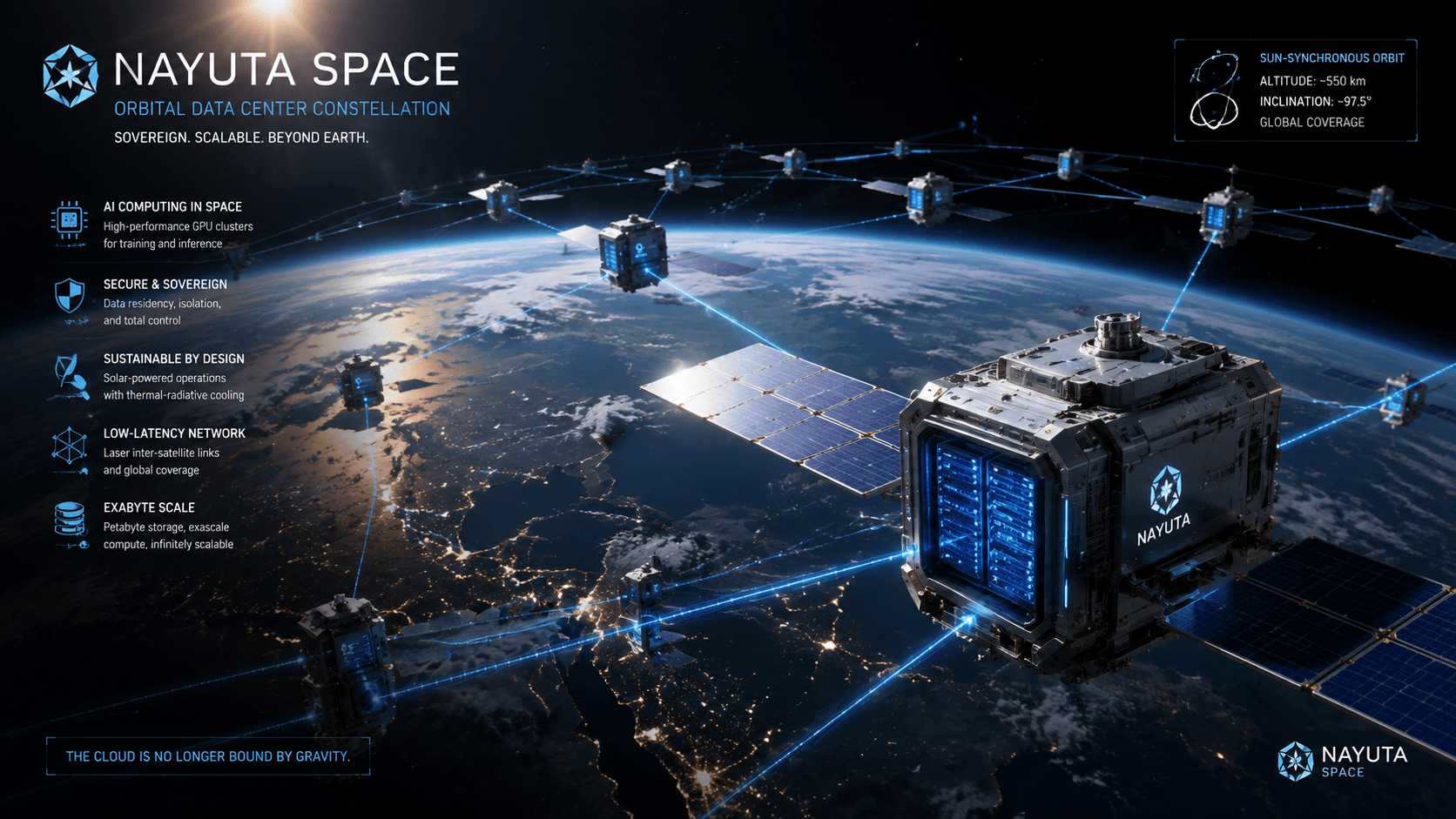
Chinese company Nayuta Space has announced plans for its Alaya orbital computing constellation. The ambitious project aims to deploy a constellation of 12,500 satellites, each equipped for artificial intelligence computing tasks. These satellites will be positioned in a sun-synchronous orbit, a specific path that allows them to pass over any given point on Earth's surface at the same local solar time. A key technological aspect of Nayuta Space's plan involves aerodynamic rocket recovery, suggesting a strategy to reduce the cost and environmental impact of launching and potentially retrieving components of the constellation. This initiative represents a significant step towards establishing data centers and advanced computing capabilities in space, potentially revolutionizing how AI workloads are handled and data is processed globally. The deployment of such a large-scale orbital computing infrastructure could have profound implications for various industries, including telecommunications, Earth observation, and scientific research. The company's focus on reusable rocket technology for recovery further underscores a growing trend in the space industry towards greater sustainability and economic efficiency.
The development of orbital computing infrastructure, such as Nayuta Space's Alaya constellation, signifies a potential paradigm shift in data processing and AI capabilities. By decentralizing compute power into space, companies aim to overcome terrestrial limitations like latency and bandwidth, enabling real-time analysis of vast datasets from Earth observation or other space-based sensors. The inclusion of aerodynamic rocket recovery points to a strategic effort to address the economic viability and environmental concerns associated with large satellite constellations. However, the sheer scale of 12,500 satellites raises questions about space debris management, orbital congestion, and the long-term sustainability of such ambitious projects. Future governance frameworks will need to evolve to manage the increasing complexity of space operations and ensure equitable access to orbital resources.
AI-generated to prompt reflection — not editorial opinion, not advice, not a statement of fact. How this works.