China's Older Carriers Now Compatible with Advanced Fighters, Boosting Naval Power
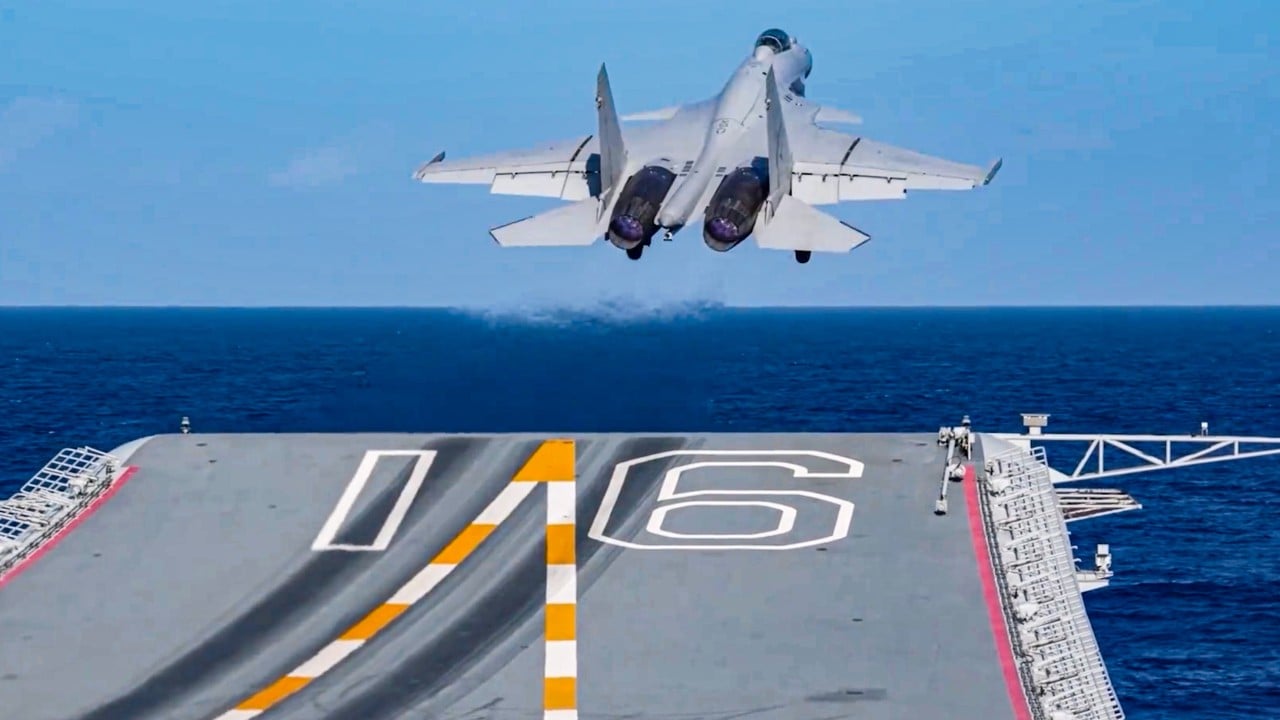
Recent exercises by the People's Liberation Army (PLA) have demonstrated that China's older aircraft carriers can operate more effectively with its newest carrier, the Fujian, than previously understood. Experts noted the presence of J-15T fighter jets, upgraded to utilize electromagnetic catapults, aboard the older Liaoning carrier. Images captured during a 40-day mission concluding on June 22 in the South China Sea and Pacific Ocean depicted these J-15T jets launching from and returning to the Liaoning. This development signifies a significant enhancement in China's naval aviation capabilities. The ability for advanced fighter jets to operate across different carrier classes streamlines deployment and increases operational flexibility. China currently operates three aircraft carriers, with this integration suggesting a more unified and potent carrier strike group strategy. The implications extend to regional power dynamics and China's growing maritime ambitions.
The integration of advanced J-15T fighter jets, equipped for electromagnetic catapults, onto older Chinese aircraft carriers like the Liaoning represents a strategic enhancement of naval power projection. This development moves beyond mere technological upgrades, suggesting a maturing operational doctrine that maximizes the utility of existing assets alongside newer platforms. The ability to deploy these advanced aircraft across multiple carriers increases sortie rates and operational flexibility, potentially reducing the reliance on a single, state-of-the-art carrier. This strategic decision likely aims to bolster China's capacity for sustained naval operations in contested regions, influencing regional security calculations. The focus on interoperability across carrier classes points to a long-term vision of building a more robust and adaptable naval force capable of meeting evolving geopolitical challenges over the next decade.
AI-generated to prompt reflection — not editorial opinion, not advice, not a statement of fact. How this works.