China's Plan to Reduce Soybean Imports Could Reshape Global Agriculture
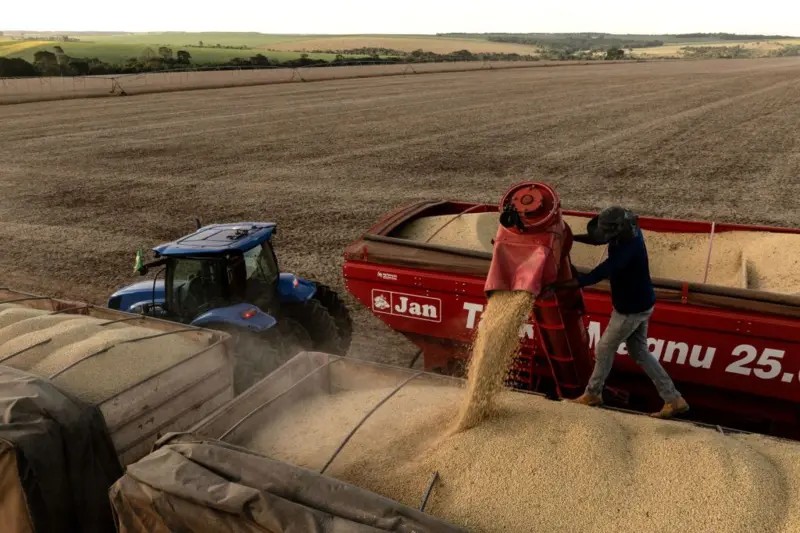
China, heavily reliant on soybean imports for domestic consumption, is strategically aiming to reduce its dependence on foreign suppliers, including Brazil. In 2025, Brazil's agribusiness earned $100 billion from the Chinese market, making it the country's largest export destination. This reliance has grown significantly over two decades, with Brazil supplying over half of China's imported soybeans and accounting for approximately 71% of China's soybean purchases. In the first half of 2026, Brazilian sales to China reached $58.322 billion, a 21.9% increase year-on-year, while exports to the U.S. declined due to tariffs. However, China's 15th Five-Year National Plan (2026-2030) explicitly prioritizes food security, setting goals to boost domestic grain production, increase self-sufficiency in agricultural seeds, and leverage AI in farming. Experts predict Chinese soybean imports could fall by 25% by 2030, equivalent to about 23.5 million tons, driven by improved animal feed, productivity gains, and advancements in alternative protein production like precision fermentation and cultivated meat. This shift is driven by China's recognition of the vulnerability associated with high import dependency, especially given global trade disputes and supply chain disruptions. The country faces structural limitations in expanding its agricultural output due to its large population and limited arable land and water resources. China's strategy mirrors its industrial policy success in sectors like solar energy and electric vehicles, involving state planning, targeted financing, and technological innovation. This move towards food self-sufficiency could significantly alter the global agricultural economy, posing a radical uncertainty for current market leaders.
China's strategic pivot towards agricultural self-sufficiency, detailed in its 15th Five-Year Plan, represents a significant structural shift with global implications. By prioritizing food security and investing in technological innovation for domestic production, China aims to mitigate risks associated with import dependency, a vulnerability amplified by recent geopolitical and economic instabilities. This initiative, mirroring its successful industrial policy in other sectors, signals a potential reshaping of global agricultural trade flows, particularly impacting major exporters like Brazil. The economic incentives for China are clear: enhancing national security and stabilizing domestic supply chains. However, the success of this strategy hinges on technological breakthroughs and overcoming inherent resource limitations. For international agricultural markets, this transition necessitates adaptation and diversification, as reliance on the Chinese market may diminish over the next decade. The long-term impact will depend on the pace of China's technological advancements and its ability to balance domestic production with global trade dynamics.
AI-generated to prompt reflection — not editorial opinion, not advice, not a statement of fact. How this works.