China's Tianwen-2 Probe Captures First Image of Quasi-Moon Kamo'oalewa
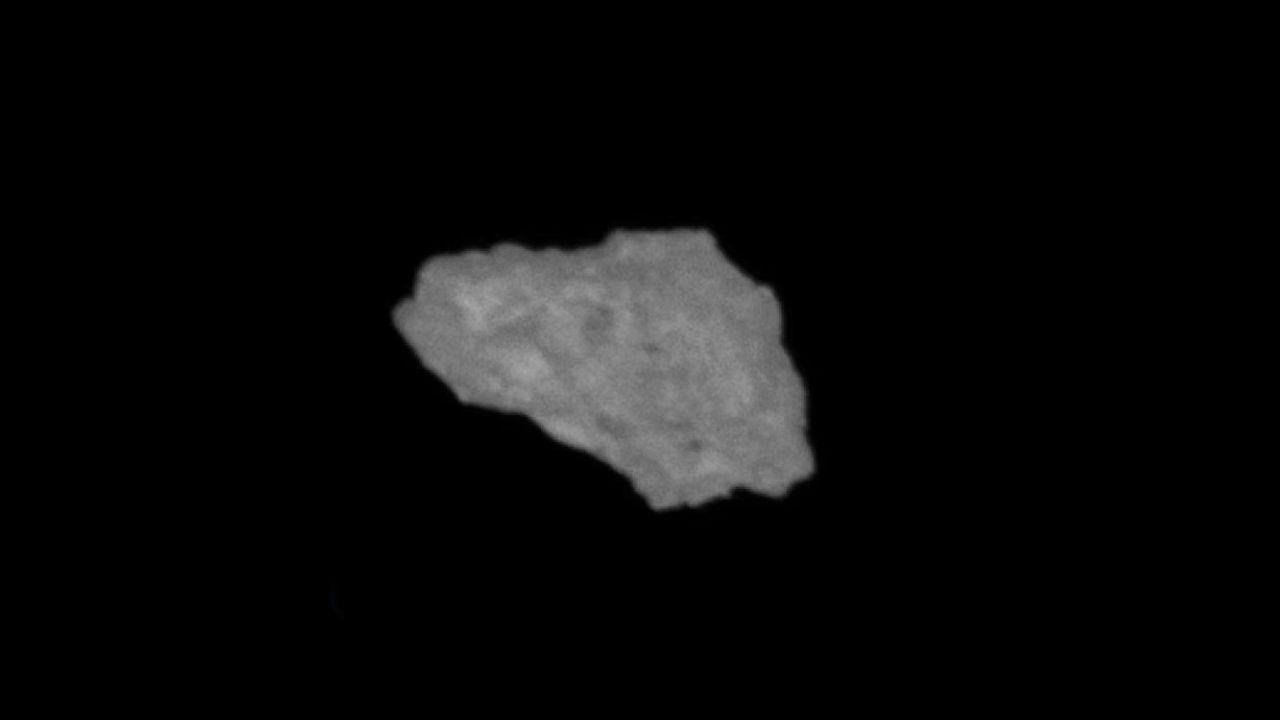
China's Tianwen-2 probe has successfully transmitted the first-ever photograph of asteroid 2016 HO3, which is also known by the name Kamo'oalewa. This celestial body is recognized as Earth's 'quasi-moon' due to its peculiar orbital characteristics. The image was sent back to Earth by the probe, marking a significant achievement in space exploration. Kamo'oalewa has been observed to orbit the Sun in a complex path that keeps it relatively close to Earth. This mission by China aims to further study the nature and composition of such near-Earth asteroids. The Tianwen-2 mission is expected to provide valuable data for understanding the dynamics of objects in our solar system. The capture of this image is a prelude to potential future sample return missions from Kamo'oalewa. Scientists are eager to analyze the data to learn more about the asteroid's origin and its relationship with Earth's orbit. This development highlights China's growing capabilities in deep space exploration and asteroid research.
The successful imaging of Kamo'oalewa by China's Tianwen-2 probe represents a notable step in the scientific community's understanding of near-Earth objects. This achievement underscores the increasing global investment in space-based reconnaissance and resource assessment capabilities. As nations develop advanced technologies for asteroid observation and potential sample return, the strategic implications for planetary defense and future space resource utilization become more pronounced. The data gathered could inform international frameworks for managing celestial bodies and contribute to a more comprehensive understanding of solar system evolution over the next decade.
AI-generated to prompt reflection — not editorial opinion, not advice, not a statement of fact. How this works.