China's Tianwen-2 Probe Captures First Images of Quasi-Moon Kamo'oalewa
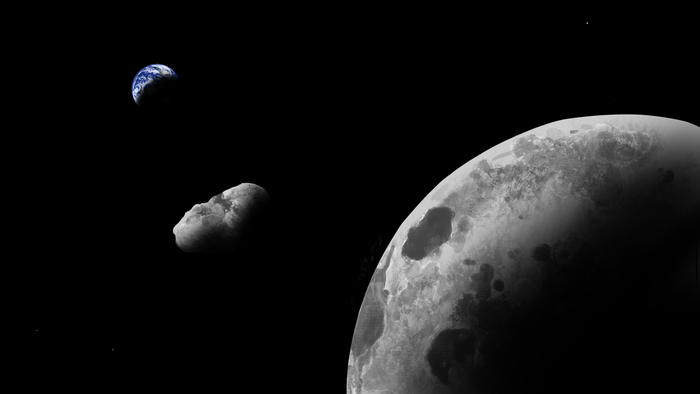
China's Tianwen-2 probe has successfully transmitted its first images of the asteroid 2016 HO3, also known as Kamo'oalewa. This celestial body is classified as a 'quasi-satellite' and is one of only seven known objects in such an orbit. Kamo'oalewa orbits the sun in tandem with Earth, maintaining a significant distance. The Tianwen-2 mission aims to conduct a detailed investigation of this mini-moon. The initial image transmission marks a significant milestone in China's space exploration efforts. Further details about the mission and the data collected are expected to be released as the investigation progresses. This development highlights China's growing capabilities in deep space exploration and asteroid research.
The successful imaging of Kamo'oalewa by China's Tianwen-2 probe underscores the nation's advancing capabilities in deep space exploration and asteroid reconnaissance. Quasi-satellites like Kamo'oalewa present unique opportunities for scientific study, potentially offering insights into the early solar system and the dynamics of near-Earth objects. As space agencies worldwide increasingly focus on resource assessment and planetary defense, missions like Tianwen-2 contribute valuable data for understanding these complex orbital relationships. The long-term implications involve refining asteroid detection and characterization techniques, which are crucial for future space missions and mitigating potential impact risks.
AI-generated to prompt reflection — not editorial opinion, not advice, not a statement of fact. How this works.