China's Tianwen-2 Probe Images Earth's Quasi-Moon Kamo'oalewa, Sample Collection Challenges Emerge
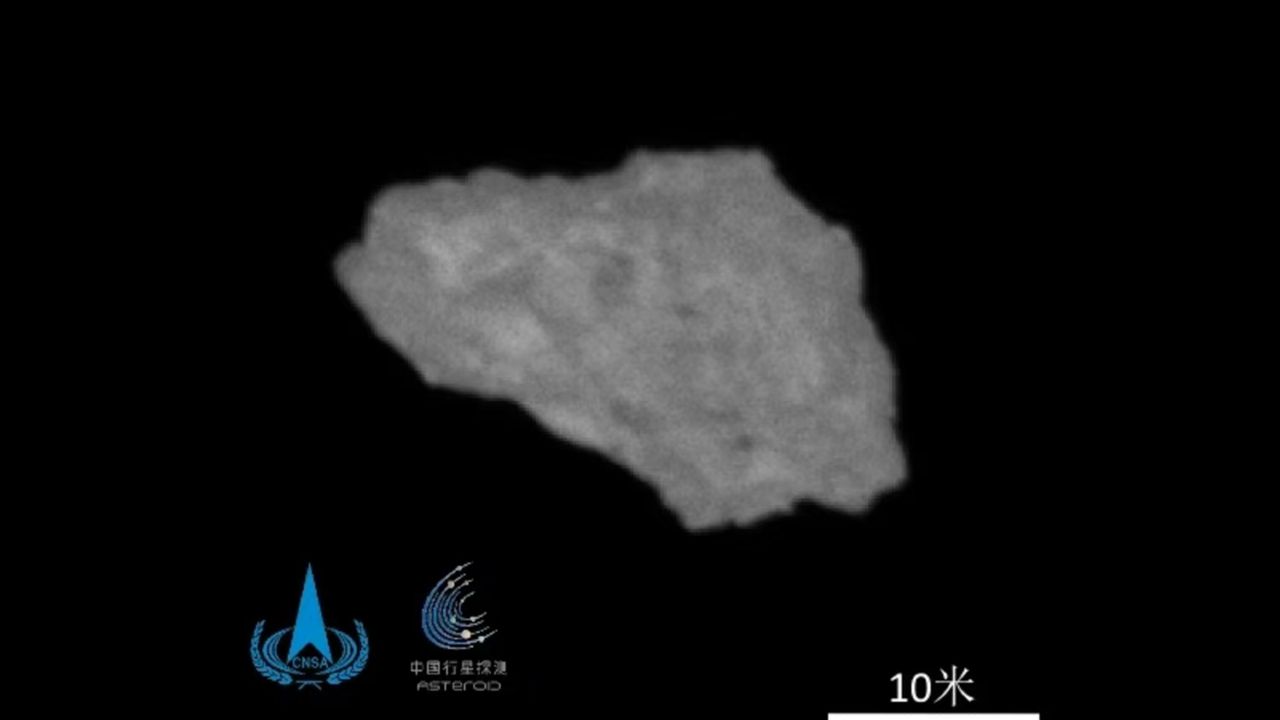
China's Tianwen-2 spacecraft has successfully captured the first close-up photograph of Kamo'oalewa, an object identified as one of Earth's 'quasi-moons.' This significant achievement marks a milestone in space exploration, providing unprecedented visual data of this celestial body. However, the release of this image, along with the probe's current operational status, indicates potential difficulties in the mission's objective to collect samples from the asteroid. The close proximity and nature of Kamo'oalewa may present unforeseen challenges for the Tianwen-2 probe's sampling mechanisms. Mission planners will likely need to reassess their strategies for sample acquisition. This development highlights the complexities inherent in asteroid sample return missions.
The successful imaging of Kamo'oalewa by China's Tianwen-2 mission demonstrates advanced capabilities in deep space reconnaissance and celestial body characterization. While the capture of the first close-up photo is a scientific triumph, the emerging challenges in sample collection underscore the inherent complexities of asteroid missions. These missions require not only precise navigation and imaging but also sophisticated engineering for material acquisition from potentially unstable or irregularly shaped surfaces. Future missions might benefit from enhanced robotic dexterity and adaptive sampling technologies to mitigate such unforeseen operational hurdles, ensuring greater success rates in scientific sample return endeavors.
AI-generated to prompt reflection — not editorial opinion, not advice, not a statement of fact. How this works.