China's Tianwen-2 Probe Reaches Quasi-Moon Asteroid Kamo'oalewa
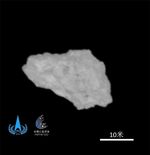
China's Tianwen-2 spacecraft has successfully reached the quasi-moon asteroid Kamo'oalewa after a 400-day journey. This celestial body is considered a quasi-satellite of Earth, orbiting our planet in a complex trajectory. The mission's primary objective is to collect samples from the asteroid's surface. However, this task is expected to be challenging due to the asteroid's rapid rotation. Kamo'oalewa completes one full rotation on its axis every 28 minutes. This rapid spin presents significant engineering hurdles for the probe's sample collection mechanisms. Tianwen-2's successful arrival marks a significant step in China's ambitious space exploration program, particularly in the field of asteroid exploration and sample return missions.
The successful arrival of the Tianwen-2 probe at asteroid Kamo'oalewa highlights advancements in China's deep space exploration capabilities. The mission's focus on sample collection from a rapidly rotating body presents a complex engineering challenge, testing the limits of autonomous navigation and robotic manipulation. Future missions could leverage the data and technological solutions developed here to address similar challenges with other fast-spinning near-Earth objects. Understanding the composition of such asteroids is crucial for planetary defense strategies and potentially for resource utilization in the long term, aligning with broader trends in space resource prospecting.
AI-generated to prompt reflection — not editorial opinion, not advice, not a statement of fact. How this works.