China's Top Four Cities See Continued Housing Price Recovery in June
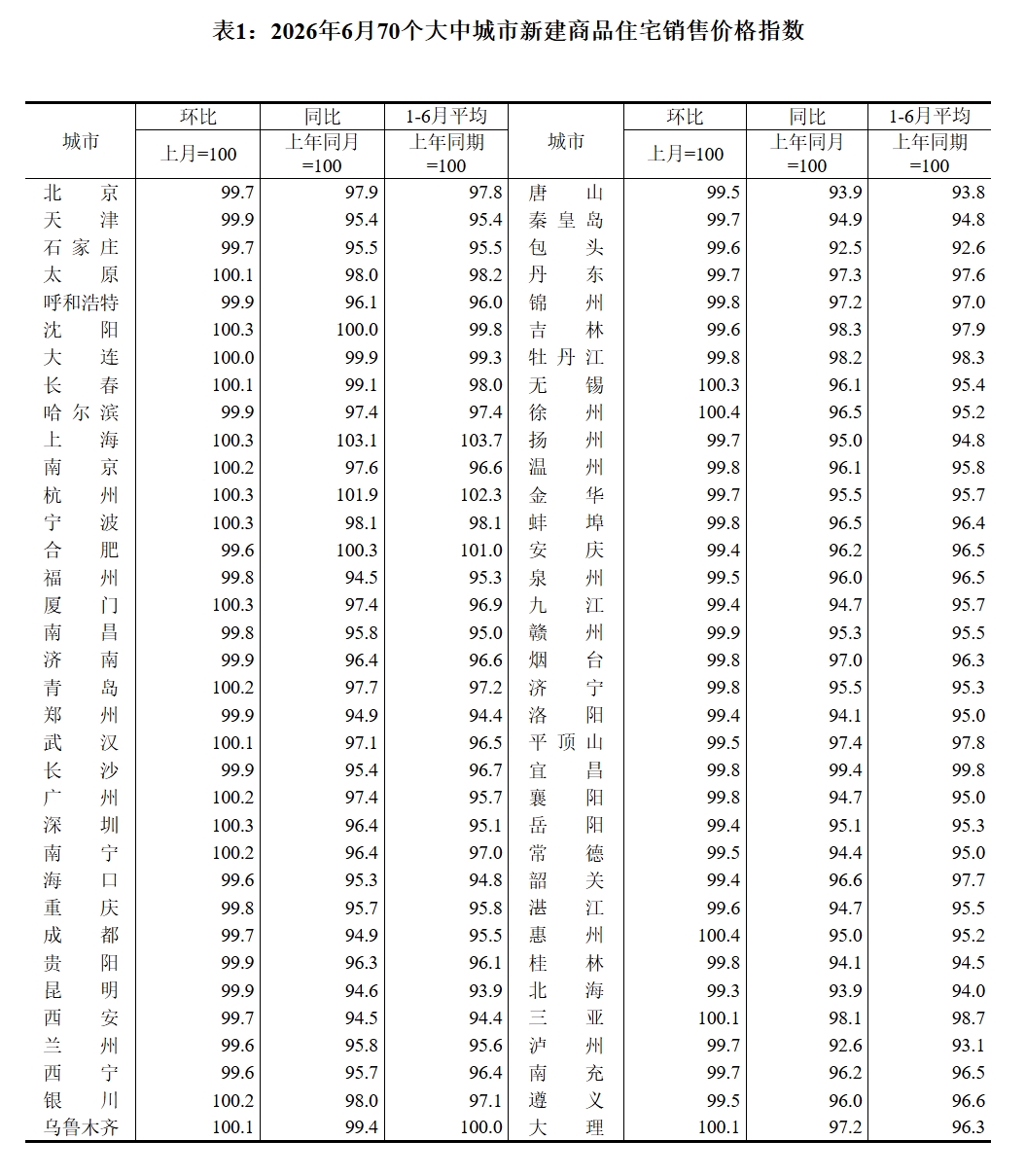
In June, China's four major first-tier cities—Shanghai, Guangzhou, and Shenzhen—experienced a continued month-on-month increase in both new and existing home prices, signaling a sustained recovery in the property market. This marks the fourth consecutive month of price gains for these cities since March 2026. While the overall increase in new home prices in first-tier cities slowed slightly to 0.1% in June, down from the previous month, Shanghai and Shenzhen saw a 0.3% rise, and Guangzhou increased by 0.2%. Beijing was the sole exception, with its housing prices declining by 0.3%. A similar trend was observed in the resale market, with first-tier cities' existing home prices rising by 0.3% month-on-month, though this growth rate also moderated. Specifically, Beijing's resale prices rose 0.1%, Shanghai 0.4%, Guangzhou 0.4%, and Shenzhen 0.3%.
Nationwide, 20 of the 70 major cities surveyed saw month-on-month increases in new home prices in June, the highest number since May 2025, indicating a broader market bottoming out and repair. Second-tier cities are showing signs of recovery, with their housing prices moving from a 0.1% decrease in the previous month to flat, led by cities like Hangzhou, Xuzhou, and Shenyang. Analysts attribute the recovery in first-tier cities to sustained demand for upgrades, while regional third-tier cities are also showing early signs of rebound. The total inventory of unsold commercial housing across China decreased by 0.9% year-on-year to 763.15 million square meters by the end of June, with low-efficiency and backlog inventory being gradually cleared. Despite a year-on-year decrease in sales area and volume for new commercial housing in the first half of 2026, analysts predict the market is nearing its bottom, with a potential full stabilization by the second half of 2027.
The data indicates a market stabilization following a period of adjustment, characterized by a gradual recovery in housing prices in major urban centers and a reduction in overall inventory. This trend aligns with expert projections that the property market cycle is nearing its conclusion. The observed demand for upgraded housing in key cities, coupled with a contraction in new construction, suggests a potential rebalancing of supply and demand dynamics. Future market performance will likely depend on the sustained release of consumer demand, policy support for housing consumption, and the ability of regional markets to achieve differentiated stabilization. The interplay between inventory levels, new construction rates, and evolving buyer preferences will be crucial in shaping the property landscape over the next decade.
AI-generated to prompt reflection — not editorial opinion, not advice, not a statement of fact. How this works.