China Storms: 17 Dead, Over 130,000 Evacuated Amidst Flooding and Landslides
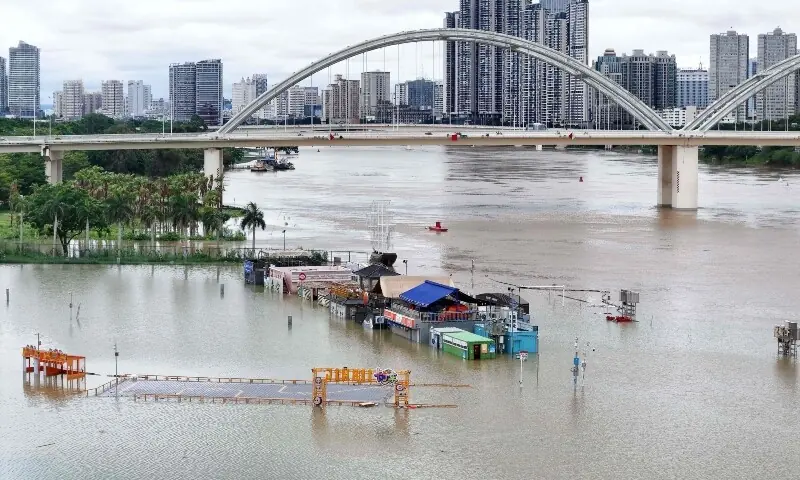
Devastating storms across China have resulted in at least 17 fatalities and hundreds of injuries, prompting the evacuation of over 130,000 people. The southern Guangxi region, the hardest-hit area, experienced a reservoir dam burst, inundating communities with muddy water and damaging nearly 13,000 acres of farmland. Forty rivers and waterways in Guangxi have overflowed, with flood control measures raised to the highest level in the regional capital, Nanning. In the central Hubei province, thunderstorms and gale-force winds claimed 11 lives and injured 331, causing significant damage to houses, with some collapsing entirely. One resident described winds "sucking" items out of his home. Meanwhile, a landslide in northwestern Gansu province killed five people, with 12 others still missing. Authorities have allocated 30 million yuan ($4.4 million) for reconstruction in Gansu. President Xi Jinping has urged "all out" rescue efforts, emphasizing the need for organized emergency operations. Experts warn that extreme weather events are increasing in frequency and intensity due to global warming, a phenomenon linked to fossil fuel emissions. China, the world's largest emitter, is also a leader in renewable energy and aims for carbon neutrality by 2060. This follows a May incident where heavy rains killed 22 people in central and southern China.
The recent severe weather events in China highlight the escalating challenges posed by extreme climate phenomena. The scale of evacuations and damage underscores the vulnerability of densely populated regions to natural disasters, necessitating robust infrastructure and advanced early warning systems. While China's commitment to renewable energy and carbon neutrality by 2060 signals a long-term strategy, the immediate need for adaptation and resilience against current climate impacts remains critical. The government's directive for "all out" rescue efforts reflects a centralized response mechanism, but the systemic challenge requires sustained investment in climate-resilient development and international cooperation to mitigate global greenhouse gas emissions. Future planning must integrate climate risk assessments into urban development and agricultural practices to minimize the human and economic toll of such events.
AI-generated to prompt reflection — not editorial opinion, not advice, not a statement of fact. How this works.