China Successfully Recovers Reusable Rocket Booster Using Net System
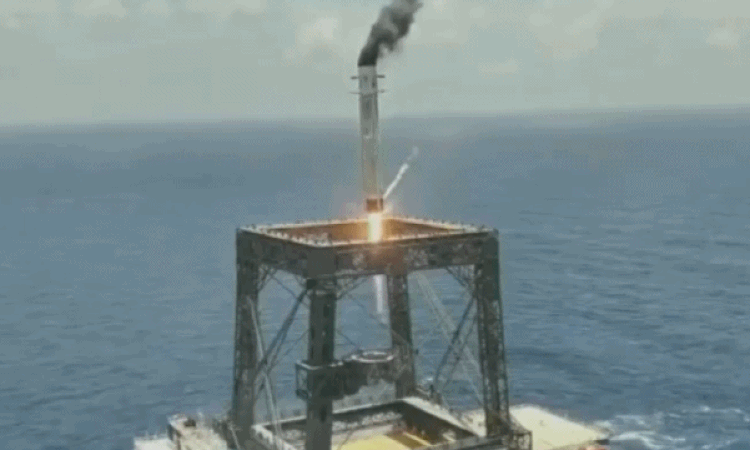
China has successfully recovered the first stage of its Long March 10B rocket using a net recovery system. The booster returned to Earth after its space mission and was captured by the specialized net. This successful recovery marks a significant step in China's development of reusable rocket technology. The Long March 10B is designed for future crewed lunar missions, and the ability to recover and reuse its first stage is crucial for reducing launch costs and increasing mission frequency. This achievement demonstrates China's growing capabilities in space exploration and rocket engineering. The successful net recovery is a key component in enabling more sustainable and cost-effective space access for future endeavors, including potential lunar bases and deep space exploration. The development of reusable rocket technology is a global race, and China's progress positions it as a major player in this field.
The successful net recovery of the Long March 10B rocket booster signifies a critical advancement in China's pursuit of reusable launch vehicle technology. This capability is essential for driving down the cost of space access, a fundamental prerequisite for ambitious future space programs, including lunar exploration and potential extraterrestrial resource utilization. The development of robust recovery systems addresses the economic and environmental sustainability challenges inherent in traditional expendable rockets. As other nations and private entities also invest heavily in reusable rocket technology, China's progress highlights the intensifying global competition in the space sector. This technological leap could reshape market dynamics and influence international cooperation and competition in space over the next decade.
AI-generated to prompt reflection — not editorial opinion, not advice, not a statement of fact. How this works.