China Telecom Launches Domestic AI Chip Cluster in Hangzhou
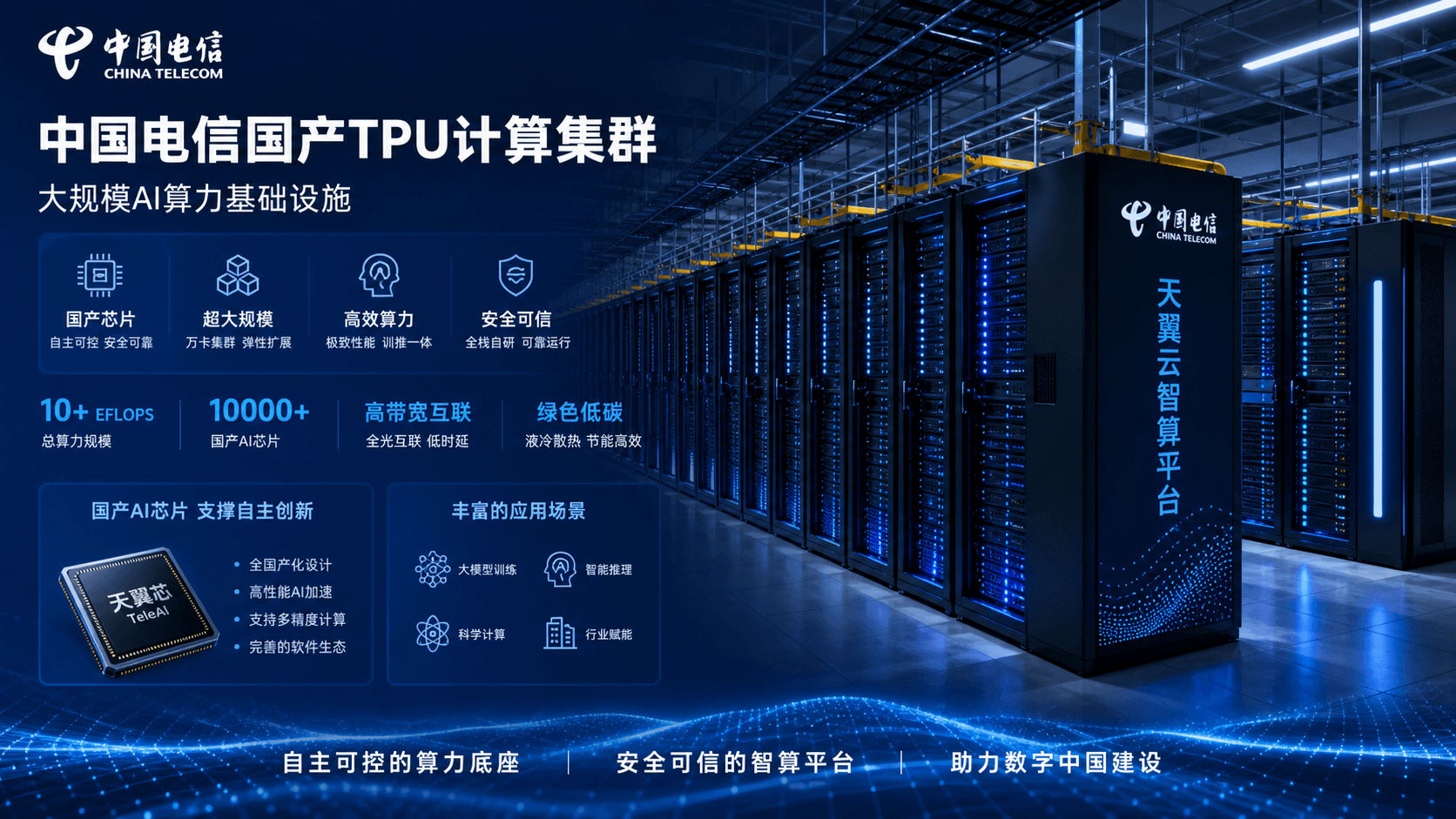
China Telecom's Hangzhou branch, in collaboration with ZTE and Zhonghao Xinying, has launched the nation's first domestic Tensor Processing Unit (TPU) cluster. This initial deployment features 1024 chips and boasts a computing power of 400 PFLOPS (petaflops). The project aims to establish a national-grade computing chain, covering everything from the chip level to the platform. Future plans include expanding the cluster's capacity significantly. The second generation of the Xuyu TPU is intended to drive this expansion, with a target of reaching 10,000 PFLOPS. This initiative underscores China's efforts to build self-reliance in advanced computing infrastructure.
The deployment of this domestic TPU cluster signifies China's strategic push towards technological sovereignty in artificial intelligence and high-performance computing. By developing and integrating indigenous chip technology, China Telecom and its partners aim to reduce reliance on foreign hardware, mitigating potential supply chain risks and geopolitical vulnerabilities. The planned expansion to 10,000 PFLOPS suggests a long-term vision for building substantial domestic AI processing capabilities. This move could foster innovation within China's tech ecosystem, potentially leading to new applications and services tailored to the domestic market, while also positioning the nation to compete more effectively in the global AI landscape over the next decade. The emphasis on a 'national-grade computing chain' from chip to platform indicates a holistic approach to infrastructure development.
AI-generated to prompt reflection — not editorial opinion, not advice, not a statement of fact. How this works.