China vs. US AI Talent: Examining the Data Behind Competition Claims
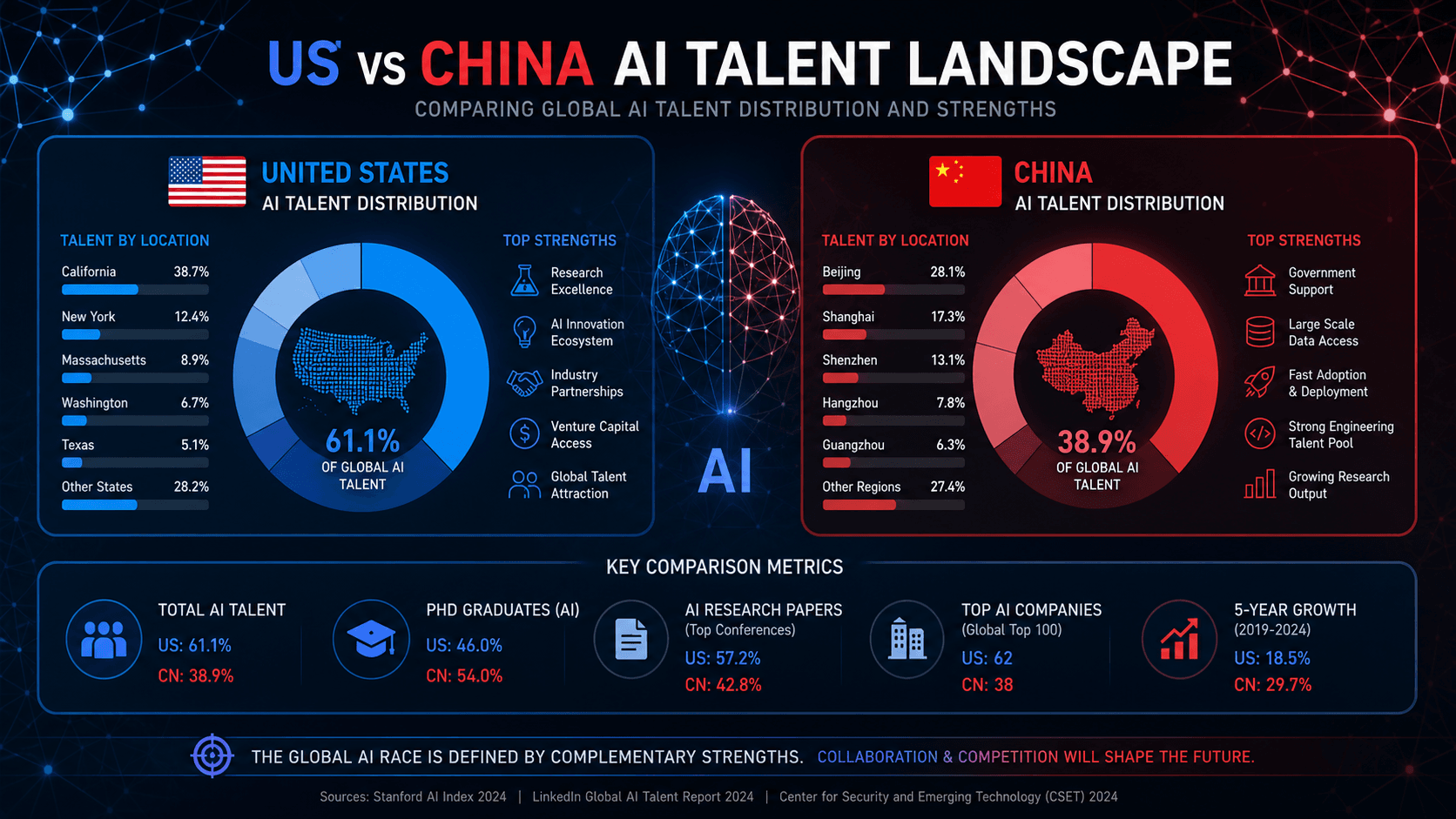
An analysis of the competition between China and the United States in the field of artificial intelligence focuses on talent development and the interpretation of data from sources like NeurIPS authorship and MacroPolo's talent tracking. The article questions the validity and implications of viral charts that purport to show China surpassing the US in AI. It delves into what this data truly signifies regarding the competitive landscape, urging a deeper look beyond surface-level interpretations. The examination aims to provide a more nuanced understanding of the strengths and weaknesses of each nation's AI ecosystem by scrutinizing the underlying metrics. Ultimately, the piece seeks to foster a more informed discussion about the trajectory of AI development and global competition.
of the competitive landscape between China and the US, particularly concerning talent, requires careful interpretation of data metrics. While metrics like publication authorship can indicate research activity, they do not solely define overall AI leadership, which also encompasses commercialization, implementation, and regulatory frameworks. The analysis of such data should consider potential biases and limitations in tracking methodologies. Understanding the global dynamics of AI talent requires looking at factors beyond publication counts, including industry investment, government policy, and the effective translation of research into real-world applications. This nuanced perspective is crucial for assessing the long-term trajectory of AI development and its geopolitical implications over the next decade.
AI-generated to prompt reflection — not editorial opinion, not advice, not a statement of fact. How this works.