China vs. USA: The Struggle for Global Supremacy
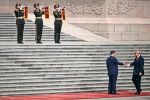
The geopolitical rivalry between China and the United States extends beyond mere power politics, encompassing a fundamental struggle over competing world order systems. While the US has been actively engaged in visible global conflicts, China has been strategically operating in the background of these same wars, quietly accumulating advantages. This indirect approach allows China to advance its interests and influence without direct confrontation, positioning itself for a stronger global standing. The ongoing conflicts serve as a backdrop against which China is subtly enhancing its position in the international arena. This strategy suggests a long-term vision for reshaping global dynamics in its favor. The competition is not just about military or economic might, but about the very principles and structures that will govern international relations in the coming decades. China's silent gains in the shadow of global conflicts indicate a sophisticated and patient approach to achieving its objectives on the world stage.
The global competition between China and the US represents a complex interplay of systemic ambitions, not solely a zero-sum power struggle. China's strategy of leveraging background influence during ongoing conflicts highlights the evolving nature of geopolitical competition, moving beyond direct confrontation to indirect influence. This approach raises questions about the effectiveness of traditional power projection versus more subtle forms of statecraft in shaping international norms and institutions. Observers should consider how this dynamic might influence global governance structures and alliances over the next decade, particularly in the context of emerging technologies and economic interdependence. The long-term implications of such indirect competition warrant careful analysis of economic, diplomatic, and technological trends.
AI-generated to prompt reflection — not editorial opinion, not advice, not a statement of fact. How this works.