Chinatown Residents Oppose $8 Billion Casino Project, Citing Predatory Impact
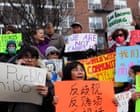
Residents of New York's Chinatown in Flushing are expressing strong opposition to an $8 billion casino development planned for their neighborhood. They fear the project will exacerbate gambling addiction and lead to significant rent increases, potentially displacing thousands of renters and forcing the closure of long-standing small businesses. Jack Hu, a 37-year-old resident and member of the No Casino in Flushing Meadows Corona Park campaign, described the development as a "predatory project" being imposed on the community without adequate consent. The community is concerned about the disproportionate harm this project could inflict on its residents, many of whom are working-class immigrants who have established businesses and homes in the area over decades. While developers often promise job creation and economic benefits with such projects, the local community fears these potential gains are overshadowed by the negative social and economic consequences. The campaign highlights a lack of community consultation, fueling anger and a sense of being overlooked in the decision-making process.
The proposed $8 billion casino development in Flushing's Chinatown presents a classic conflict between large-scale economic development initiatives and the preservation of established, working-class immigrant communities. From a systems perspective, the tension arises from differing incentive structures: developers are driven by profit maximization and market expansion, while residents prioritize community stability, affordability, and cultural integrity. The residents' concerns about increased gambling addiction and rent hikes highlight potential negative externalities that may not be fully accounted for in the initial project economics. Future urban planning and development frameworks will need to better integrate mechanisms for genuine community consent and equitable benefit-sharing, ensuring that large-scale projects do not inadvertently destabilize vulnerable populations. The situation underscores the need for robust regulatory oversight that balances economic growth with social equity and community well-being in the face of rapid urbanization and investment.
AI-generated to prompt reflection — not editorial opinion, not advice, not a statement of fact. How this works.