Chinese Desktop CNC Startup Qisu Tech Raises Nearly $14 Million in Seed Funding
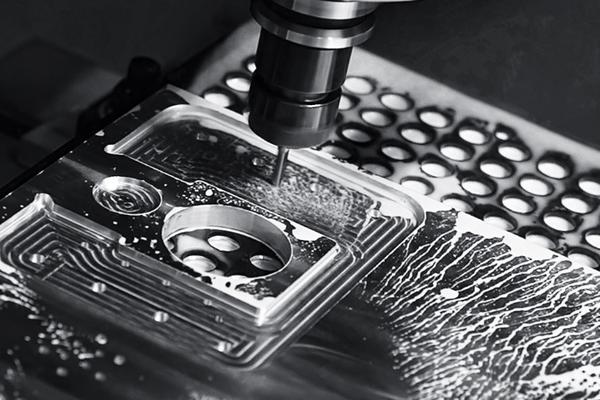
Qisu Tech, a Chinese startup specializing in desktop CNC (Computer Numerical Control) machines, has successfully closed a seed funding round of nearly 100 million RMB (approximately $14 million USD). The investment was led by SenseTime Guoxiang and Shouxing Technology, with participation from Quanxinshi and Y Combinator China. These funds will be allocated to the research and development of Qisu Tech's desktop CNC hardware and software, mass production, and market expansion.
The company aims to lower the barrier to entry for CNC manufacturing, a field considered a vast, untapped market following the popularization of 3D printers and laser engravers. Qisu Tech's core innovation lies in its AI-powered CAM (Computer-Aided Manufacturing) software, designed to simplify the complex process of converting 3D models into machine instructions. Traditionally, operating CAM software requires extensive technical knowledge and experience, often taking years to master. Qisu Tech's AI system aims to automate this, allowing users with minimal expertise to import a model and generate machining instructions in a few simple steps.
The startup's team, with roots in Zhejiang University's computer science and mechanical engineering departments, has accumulated thousands of hours of practical experience and built a flexible factory to gather data and validate their AI algorithms. Their upcoming desktop five-axis CNC machine, slated for release in Q4, will feature automatic tool changing, automatic tool setting, a soundproof enclosure, and a high-power spindle, all supported by their proprietary AI CAM system for an end-to-end user-friendly experience.
The substantial seed funding for Qisu Tech highlights a significant market opportunity in democratizing advanced manufacturing technologies like CNC. The company's strategy of leveraging AI to abstract away the steep learning curve associated with traditional CAM software addresses a critical bottleneck that has historically limited broader adoption. This approach aligns with the broader trend of AI integration across industries, aiming to enhance accessibility and efficiency. The success of this venture will likely depend on the robustness and adaptability of its AI models in handling the inherent complexities and variability of real-world manufacturing scenarios, and its ability to scale production while maintaining quality. Future developments could see such AI-driven systems not only simplifying operation but also optimizing manufacturing processes for efficiency and material usage, further accelerating the shift towards decentralized and personalized production.
AI-generated to prompt reflection — not editorial opinion, not advice, not a statement of fact. How this works.