Chinese Drones Aid Flood Rescues, Highlighting Low-Altitude Economy Potential
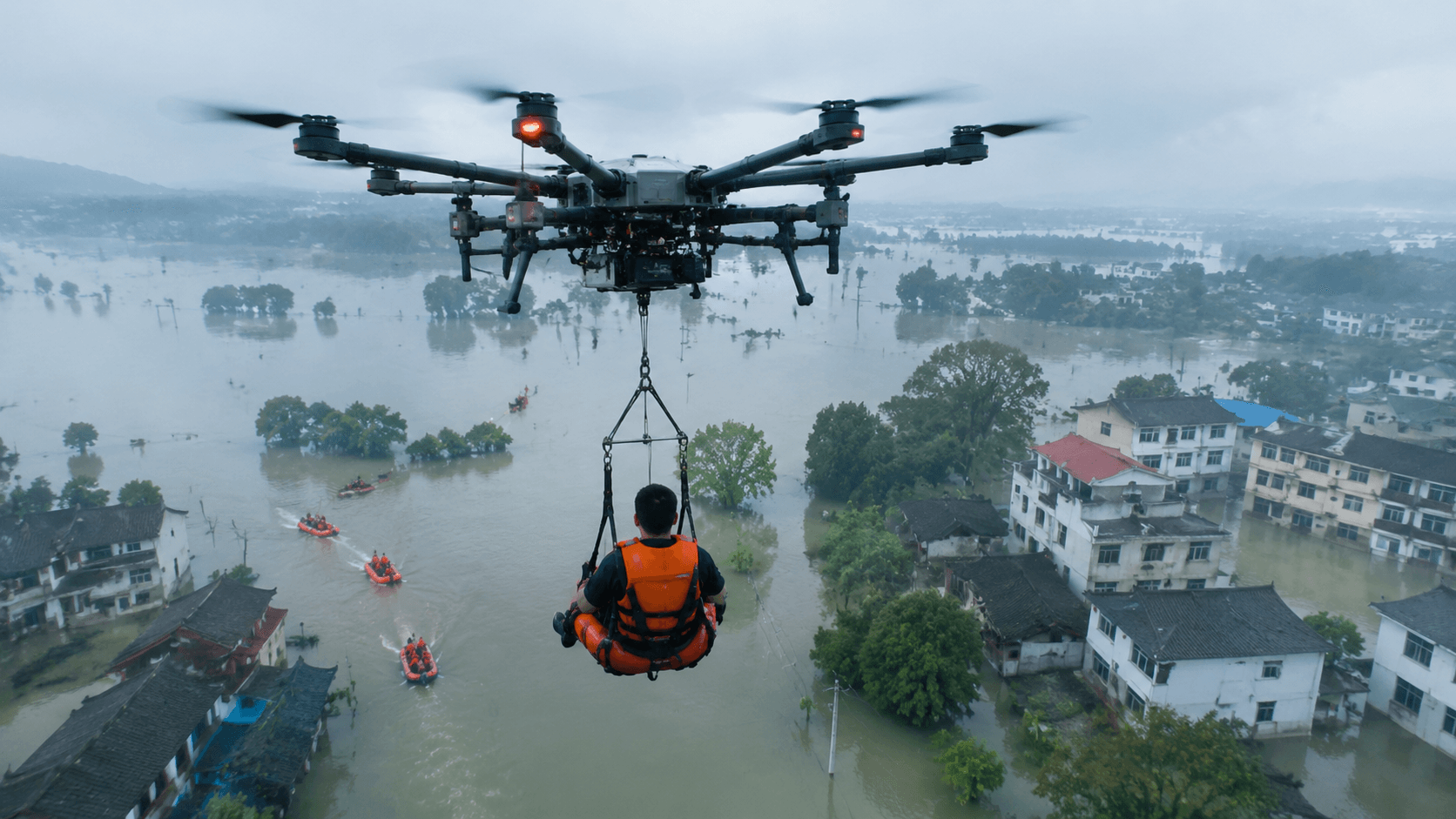
Heavy-lift drones in China's Guangxi province have been utilized for flood rescue operations, airlifting individuals to safety. This deployment involved deviating from standard safety protocols, underscoring the significant industrial capacity within China's burgeoning low-altitude economy. This sector, estimated to be worth trillions of yuan, is demonstrating its potential beyond commercial applications. The use of drones in such critical situations highlights their evolving capabilities and the rapid development of this industry. It also points to a potential shift in emergency response strategies, integrating advanced aerial technology. The success of these missions, despite protocol deviations, suggests a need for revised regulations and operational frameworks to accommodate such innovative uses. The trillion-yuan low-altitude economy encompasses a wide range of aerial technologies and services, from logistics to surveillance and now, emergency relief.
The deployment of heavy-lift drones for emergency flood rescues in Guangxi, even with deviations from standard safety protocols, showcases the rapidly advancing capabilities within China's low-altitude economy. This event suggests a strategic prioritization of immediate life-saving over strict adherence to existing regulations, potentially indicating a dynamic where technological application is outpacing regulatory frameworks. The trillion-yuan valuation of this sector implies substantial investment and governmental support, driving innovation in areas critical for national infrastructure and disaster response. Future developments may see a recalibration of safety standards to integrate these advanced aerial systems more formally, balancing operational efficiency with robust safety measures. This situation presents a case study in how emergent technologies can necessitate adaptive governance and operational paradigms to unlock their full societal benefit.
AI-generated to prompt reflection — not editorial opinion, not advice, not a statement of fact. How this works.