Chinese DUV Chip Equipment Progress Not ASML's Biggest Threat, Analysts Say
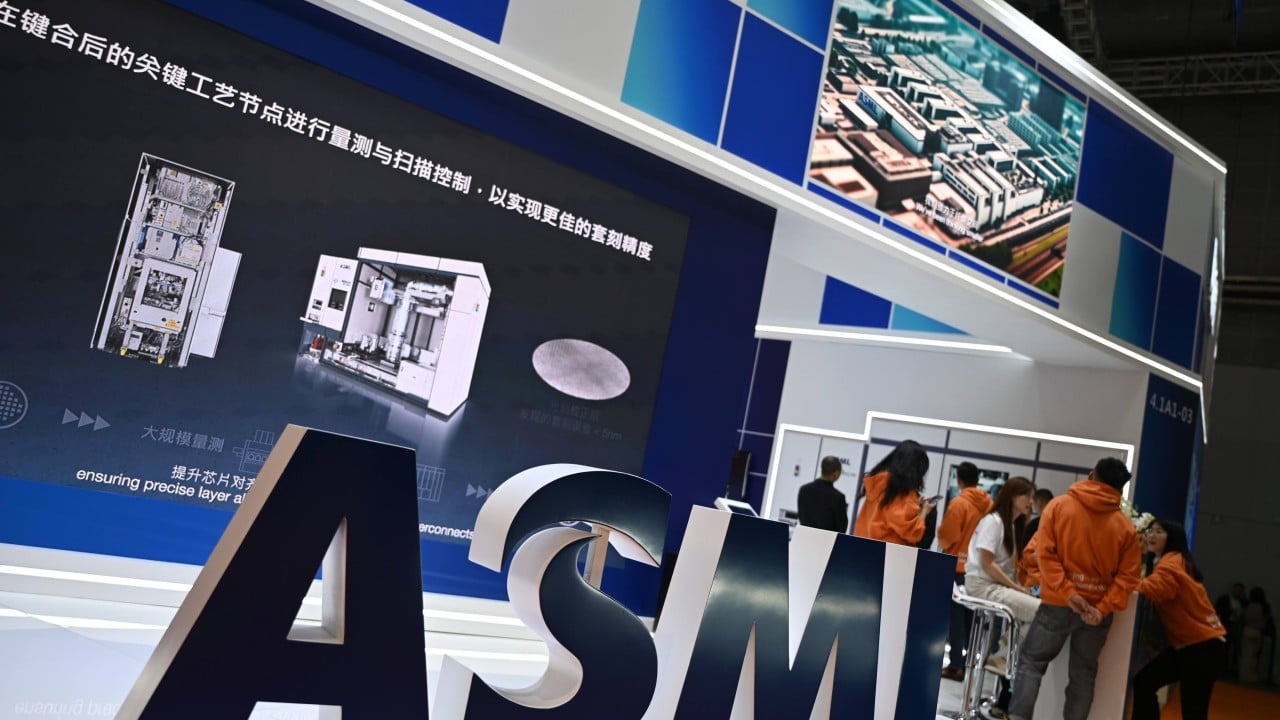
Western concerns about China's advancements in chipmaking equipment are growing, but industry analysts believe that domestic Chinese machines do not pose the primary threat to ASML, the leading Dutch firm in the sector. ASML's stock experienced a notable decline, falling over 8% at one point on Monday in US trading before closing down 5.8%. This market reaction followed a report from The Information indicating that China has started producing its own immersion deep-ultraviolet (DUV) lithography machines. These machines are being manufactured by a state-backed enterprise located in Shanghai. While this development represents a significant step for China's domestic semiconductor industry, analysts suggest that ASML faces larger challenges elsewhere. The specific details of China's manufacturing capabilities and the performance of these new DUV machines are still emerging. The report highlights the increasing focus on China's efforts to achieve self-sufficiency in critical high-tech sectors, particularly in semiconductor manufacturing technology. However, the broader implications for ASML's market dominance are subject to ongoing analysis.
The development of indigenous DUV lithography machines in China signifies a strategic push towards semiconductor self-sufficiency, driven by geopolitical considerations and supply chain resilience goals. While this progress may impact market dynamics and ASML's future revenue streams, the primary competitive pressures on ASML likely stem from the intricate technological race in advanced lithography, particularly EUV, and the evolving global regulatory landscape. ASML's dominance is built on decades of R&D and a complex ecosystem; therefore, incremental advances in less sophisticated DUV technology by a competitor, while noteworthy, may not fundamentally alter its leading position in the immediate term. The long-term challenge will involve ASML's ability to maintain its technological lead and navigate international trade policies, which could influence market access and collaborative opportunities.
AI-generated to prompt reflection — not editorial opinion, not advice, not a statement of fact. How this works.