Chinese Fossil Reveals Prehistoric Marine Reptile's Internal Organs
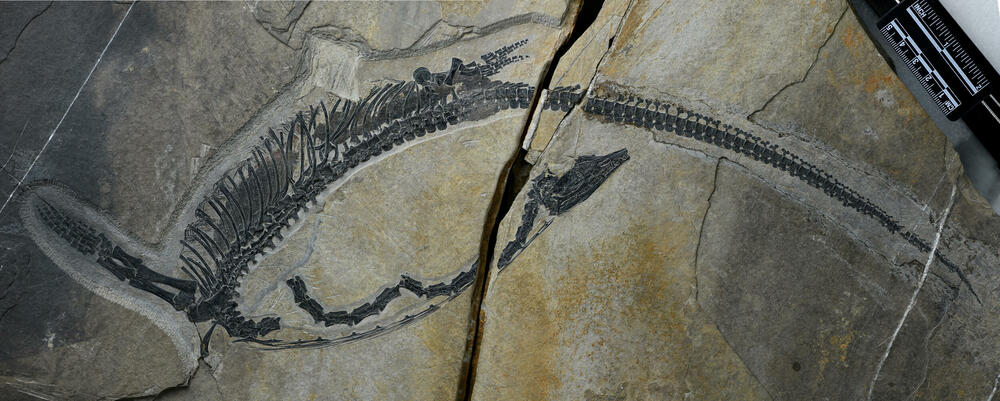
A newly discovered fossil in China has provided scientists with an unprecedented look at the internal organs of a prehistoric marine reptile. This ancient creature, believed to have evolved from land-dwelling reptiles, was apparently a skilled swimmer. Its locomotion primarily relied on its tail for propulsion, with its forelimbs acting as rudders for steering. The long neck was a key adaptation for hunting, enabling it to efficiently catch fish in its aquatic environment. This remarkable fossil offers valuable insights into the anatomy and lifestyle of these early marine vertebrates. Researchers are studying the fossil to understand the evolutionary transition from land to sea. The preservation of soft tissues, including internal organs, is exceptionally rare for fossils of this age. This discovery contributes significantly to our understanding of prehistoric marine ecosystems and vertebrate evolution.
The discovery of this exceptionally well-preserved fossil offers a rare window into the evolutionary adaptations of terrestrial reptiles transitioning to a marine environment. Analyzing the internal organs and skeletal structure provides empirical data to understand the physiological and biomechanical challenges overcome during this significant evolutionary step. This finding can inform broader scientific understanding of evolutionary pathways and the environmental pressures that drive such transformations. Future research may leverage this data to model the metabolic and hydrodynamic efficiencies required for marine life, potentially offering insights into bio-inspired engineering or understanding the resilience of life in changing planetary conditions.
AI-generated to prompt reflection — not editorial opinion, not advice, not a statement of fact. How this works.
