Chinese Observatory Detects Universe's Most Energetic Particle
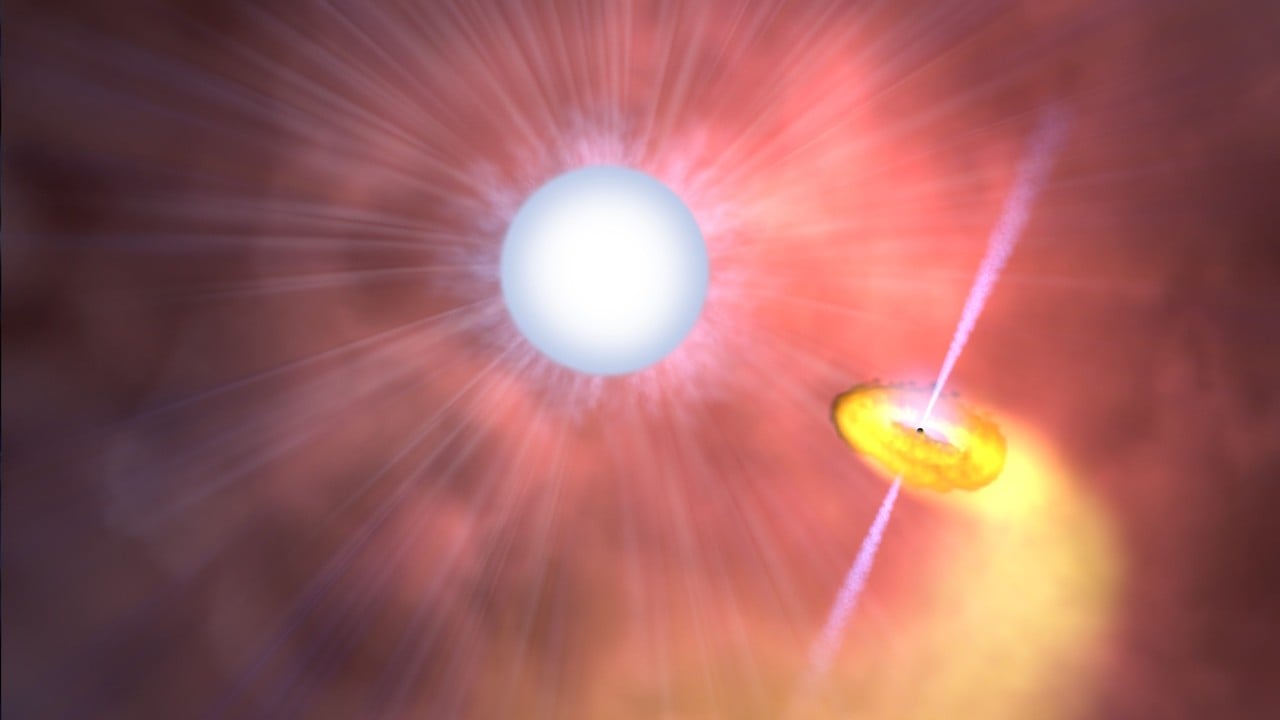
A China-led research team has identified the highest-energy light particle ever recorded, indicating that the universe can accelerate matter to energies 30 times greater than previously theorized limits. This groundbreaking discovery was made by the Large High Altitude Air Shower Observatory (LHAASO). The particle originated from a binary system named Cygnus X-3, located in the Cygnus constellation. This celestial phenomenon involves a collapsed star, or dead star, drawing material from a large companion star and expelling powerful jets into space. After an immense journey of approximately 30,000 years, the particle arrived on Earth in March 2024. Its detection by the LHAASO facility represents a significant advancement in astrophysics.
The detection of an exceptionally high-energy particle challenges existing astrophysical models of particle acceleration within cosmic phenomena. This finding underscores the potential for extreme environments, such as binary star systems, to generate energies far beyond current theoretical maximums. Future research will likely focus on refining acceleration mechanisms and understanding the astrophysical sources capable of such extreme energy outputs. This could lead to a revised understanding of high-energy astrophysics and the fundamental limits of particle acceleration in the universe.
AI-generated to prompt reflection — not editorial opinion, not advice, not a statement of fact. How this works.
