Chinese Probe Captures First Image of Earth's 'Quasi-Moon' Kamo'oalewa
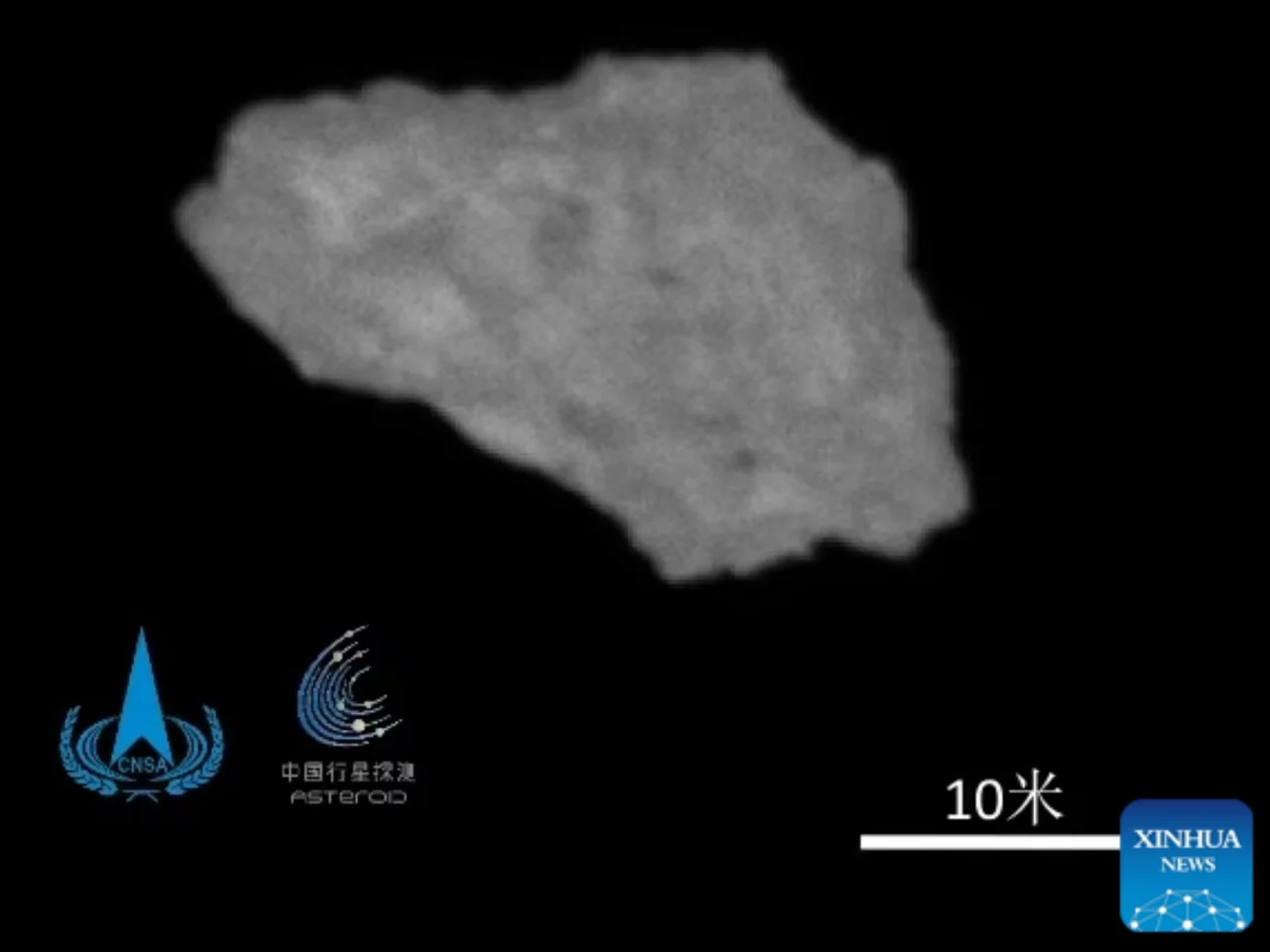
A Chinese probe has transmitted the first photograph of Kamo'oalewa, an asteroid recognized as Earth's "quasi-moon." The image, though small and blurry, reveals the object's unusual, Corn Flake-like shape. This celestial body orbits the Sun but maintains a close, albeit complex, relationship with Earth, earning it the designation of a quasi-satellite. The Tianwen-2 mission is responsible for this groundbreaking photographic achievement. Kamo'oalewa's unique orbital characteristics make it a subject of significant scientific interest. Researchers are keen to understand its formation and its dynamic interaction with our planet. The mission aims to gather more data on this peculiar asteroid. This image marks a milestone in asteroid observation and China's space exploration endeavors. The scientific community anticipates further discoveries from the Tianwen-2 mission regarding Kamo'oalewa and potentially other near-Earth objects.
The capture of the first image of Kamo'oalewa by the Tianwen-2 probe represents a significant advancement in the observation of near-Earth objects. This event highlights the increasing capabilities of national space programs in conducting detailed astronomical surveys. Understanding the dynamics of quasi-moons like Kamo'oalewa is crucial for developing comprehensive models of the solar system's evolution and for planetary defense strategies. The mission's success underscores the importance of sustained investment in space science and technology, offering potential insights into asteroid composition and resource potential for future space-based economies. Future research will likely focus on the stability of Kamo'oalewa's orbit and its potential origins, providing a broader context for asteroid research within the next decade.
AI-generated to prompt reflection — not editorial opinion, not advice, not a statement of fact. How this works.