Chinese probe Tianwen-2 reaches asteroid Kamo'oalewa, begins scientific study
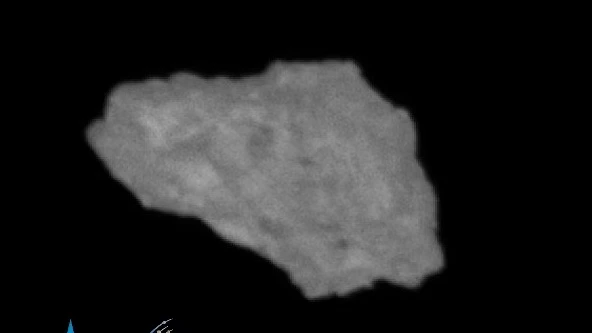
The Chinese spacecraft Tianwen-2 has successfully reached the asteroid Kamo'oalewa after a journey of over a year, approaching to within 20 kilometers. The China National Space Administration (CNSA) confirmed the probe has commenced its scientific investigation of the small celestial body, which measures only tens of meters across. Kamo'oalewa orbits the sun in close synchrony with Earth, leading some scientists to speculate it may be a fragment of the Moon ejected by an impact. The primary objective of Tianwen-2 is to collect material from Kamo'oalewa and return it to Earth for laboratory analysis, potentially clarifying the asteroid's origin. The probe has traveled approximately one billion kilometers since its launch in May of last year, first observing the object in June and performing a course correction on June 7th from a distance of about 30,000 kilometers. Tianwen-2 will now map the asteroid from close range before attempting to collect a small amount of material. The mission plans include a brief landing or an unprecedented surface anchoring maneuver to gather samples. A small return capsule is expected to land on Earth by the end of 2027, which would make China the third nation to bring asteroid material back, following Japan and the United States. The main probe will not return but will proceed to comet 311P in the asteroid belt, with the entire Tianwen-2 mission slated to last about ten years. This mission is part of China's broader solar system exploration program, which previously landed a rover on Mars with Tianwen-1 in 2021 and plans a Mars sample return mission, Tianwen-3, for 2028.
The Tianwen-2 mission exemplifies China's growing capabilities and strategic ambitions in space exploration, particularly in the realm of sample return missions. By targeting a near-Earth asteroid with unique orbital characteristics, China is not only advancing scientific understanding of small solar system bodies and their potential lunar origins but also demonstrating sophisticated autonomous navigation and sample collection technologies. The inclusion of an experimental surface anchoring technique suggests a willingness to innovate and push the boundaries of current space engineering. This mission's success, alongside planned future endeavors like Tianwen-3's Mars sample return, positions China as a significant player in the global space race, potentially influencing international collaboration and competition in scientific and resource-driven space activities over the next decade.
AI-generated to prompt reflection — not editorial opinion, not advice, not a statement of fact. How this works.