Chinese Scientists Develop Novel Chip 478x Faster Than Nvidia GPUs
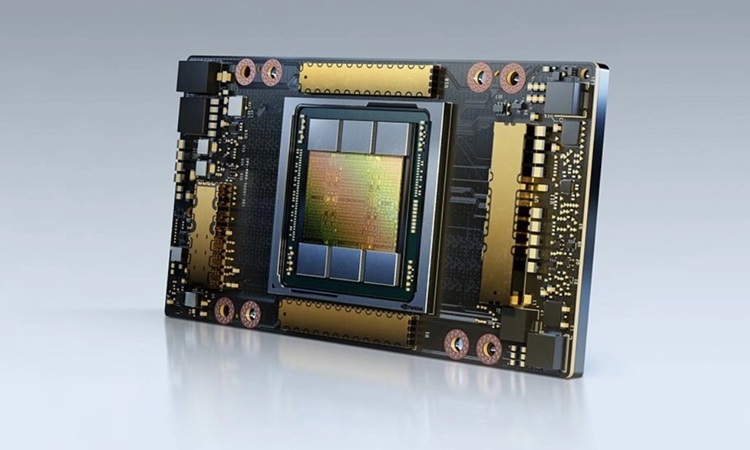
Chinese scientists have engineered a revolutionary microchip capable of performing calculations and storing data within a single memory array. This innovative design mimics the intricate structure of the human brain, enabling real-time simulation of complex processes. The new chip demonstrates a remarkable performance leap, achieving speeds up to 478 times faster than current Graphics Processing Units (GPUs) from Nvidia. This breakthrough holds significant potential for advancing artificial intelligence and high-performance computing applications. The ability to integrate computation and memory on a single chip addresses a key bottleneck in traditional computing architectures, known as the von Neumann bottleneck. By emulating neural structures, the chip could pave the way for more efficient and powerful AI systems. Further development is expected to explore its capabilities in various scientific and technological fields.
This development represents a significant advancement in neuromorphic computing, potentially overcoming limitations in current GPU architectures. By integrating memory and processing, the chip could dramatically reduce energy consumption and latency for AI tasks. The speed increase suggests a paradigm shift in how complex computations are handled, moving towards more biologically inspired designs. Future implications may include more efficient AI model training, real-time complex system simulations, and novel hardware for edge computing devices. The long-term impact will depend on scalability, manufacturing costs, and the development of software ecosystems to fully leverage this new architecture, posing a challenge for established hardware providers.
AI-generated to prompt reflection — not editorial opinion, not advice, not a statement of fact. How this works.