Chinese Startup Moonshot AI Challenges US Dominance in Frontier AI
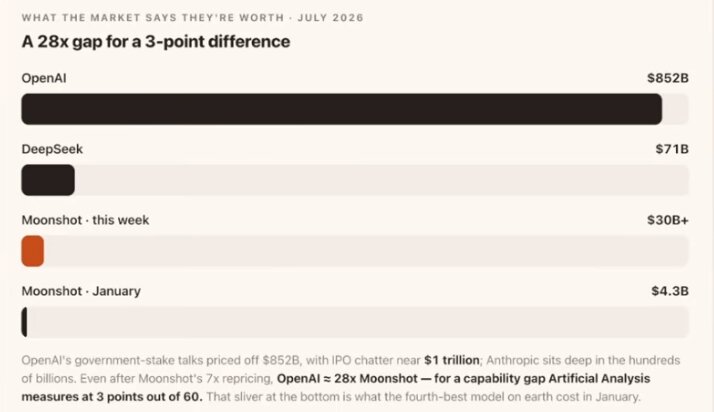
On July 16, Beijing-based startup Moonshot AI released Kimi K3, a 2.8-trillion-parameter open-weight model. This launch challenges the long-held Wall Street assumption that frontier artificial intelligence development was primarily an American duopoly. For the past two years, the prevailing sentiment was that only a few American companies held a significant lead in this advanced AI field. Moonshot AI's Kimi K3, described as the largest open-weight model to date, signifies a major advancement from a Chinese competitor. The release indicates that the global race for AI supremacy is more competitive than previously anticipated, with at least two major players now clearly in contention. This development is likely to reshape the landscape of AI research and development, potentially accelerating innovation and competition worldwide.
The introduction of Moonshot AI's Kimi K3, a 2.8-trillion-parameter open-weight model, signals a significant shift in the global AI development landscape. This event directly challenges the previous market consensus that frontier AI was dominated by a few American entities. The emergence of a highly capable, large-scale open-weight model from a Chinese startup suggests a more distributed and competitive future for AI innovation. This dynamic could foster accelerated progress by increasing R&D investment and competition, but also raises questions about global AI governance and intellectual property frameworks. The long-term implications will depend on how open-source models like Kimi K3 are integrated into global technology ecosystems and how regulatory bodies adapt to this evolving competitive environment.
AI-generated to prompt reflection — not editorial opinion, not advice, not a statement of fact. How this works.