Chinese startup secures millions for advanced optical chip production
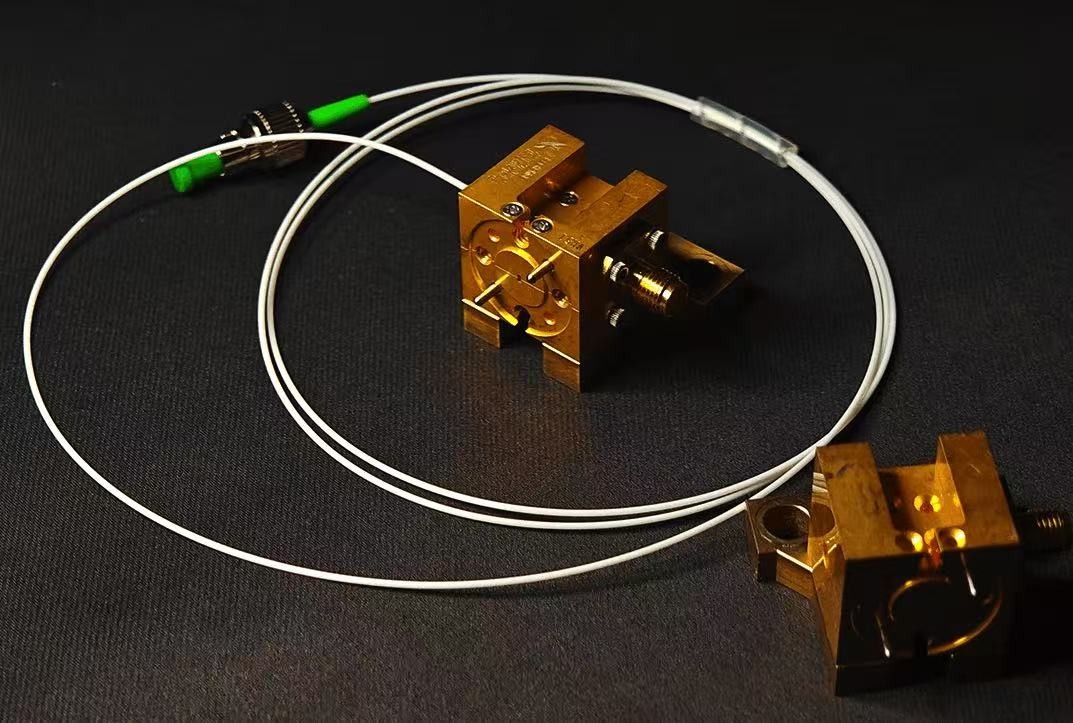
Shanghai Kuailin Optoelectronics Technology Co., Ltd. (Kuailin Optoelectronics) has successfully completed a multi-million RMB angel funding round, led by Xiaomiao Langcheng with participation from Yicun Capital. The company, advised by Zhonglan Kechuang, will use the funds to accelerate the research, development, and validation of its ultra-high-speed optical detector chips, aiming to boost domestic production and recruit top talent.
Founded in Shanghai in 2024, Kuailin Optoelectronics specializes in III-V high-speed optoelectronic detector chips. The team, comprising four young PhDs from Professor Chen Baile's group at ShanghaiTech University, has previously set world records in AI optical interconnects and 6G communication core optical chips, filling a gap in China's ultra-high-speed optical receiver chips. Their research has been published in prestigious journals like Nature and Nature Photonics.
The company's technology addresses the growing demand for high-bandwidth optical interconnects driven by AI computing clusters and data center upgrades. Kuailin Optoelectronics has developed a comprehensive system from device design to integration, focusing on InP photodetector (PD) and array products for data communication. These products are designed for 800G, 1.6T, and 3.2T optical interconnects, as well as next-generation data center architectures like LPO/LRO and NPO/CPO, supporting the urgent need for low-power, high-bandwidth optical components. The company plans to achieve large-scale delivery of core products by 2027, while also generating revenue in the 6G terahertz chip sector.
Founder Li Linze highlighted that the primary goal of this funding is to achieve mass production, ensuring high performance and reliability for module manufacturers. He explained that their unique UTC-PD structure overcomes the trade-off between bandwidth and efficiency, achieving over 200 GHz bandwidth and 0.8 A/W responsivity. While the company has explored other applications like terahertz communication, it is prioritizing optical communication due to its current market demand. The main challenge lies in adapting laboratory technology to mass production lines, ensuring consistent quality and yield across all manufacturing stages.
The emergence of Kuailin Optoelectronics highlights a critical juncture in the global semiconductor supply chain, particularly for high-speed optical components essential for AI infrastructure and future communication standards like 6G. The company's focus on domestic production addresses strategic vulnerabilities in the current market, where advanced technologies are heavily concentrated among a few international players. By developing a complete in-house capability from design to integration, Kuailin Optoelectronics aims to navigate the complexities of scaling from research breakthroughs to reliable mass production. The success of this venture will depend on its ability to consistently meet the stringent performance, yield, and cost demands of the optical module industry, thereby contributing to China's goal of technological self-sufficiency in a rapidly evolving digital landscape.
AI-generated to prompt reflection — not editorial opinion, not advice, not a statement of fact. How this works.