Chinese Universities Unveil World's First Neurodynamic Chip Using Phase-Change Memristors
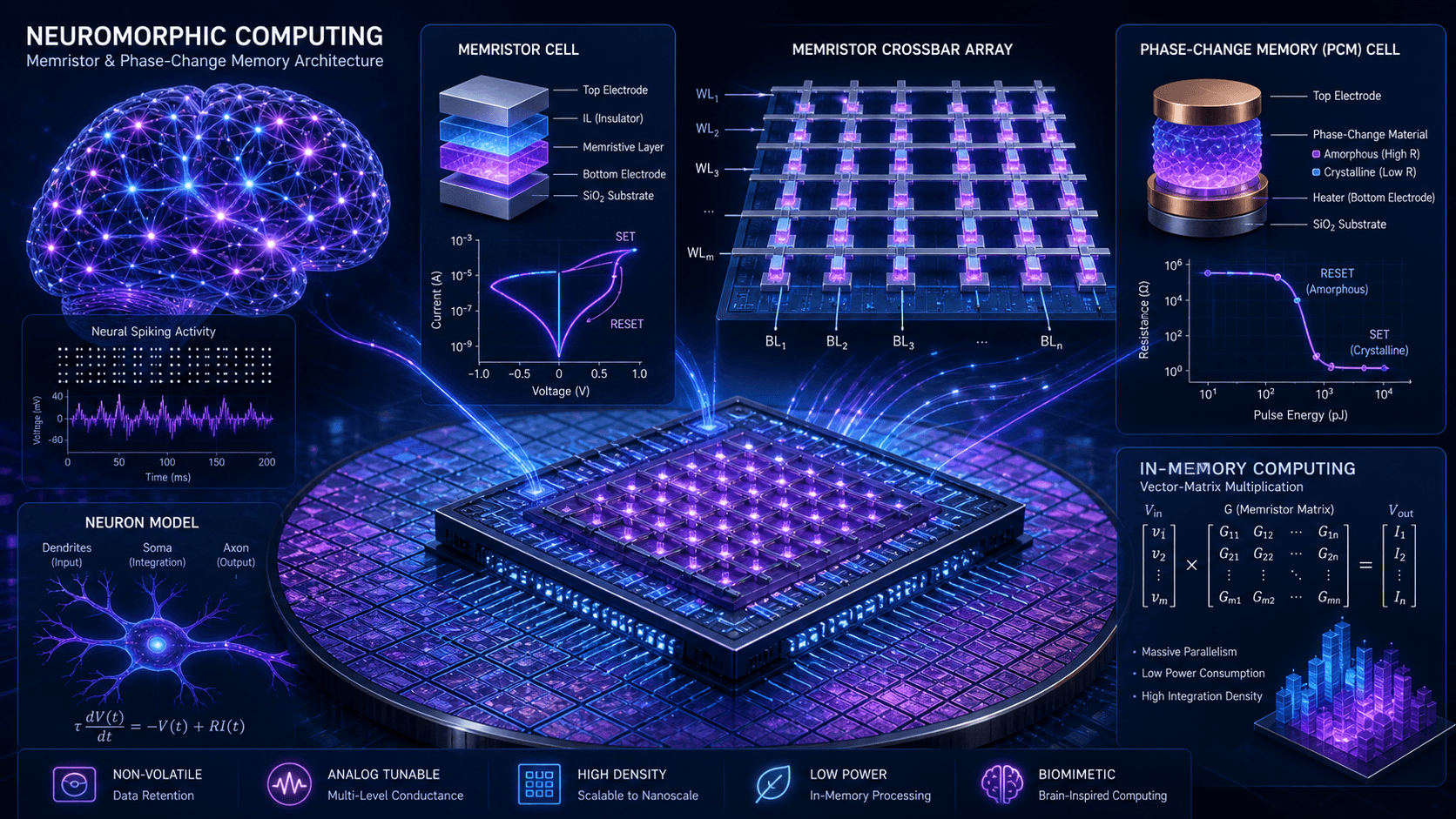
Researchers from Peking University and the Chinese Academy of Sciences (CAS) have developed the world's first neurodynamic system chip. This groundbreaking chip utilizes phase-change memristors as its core component. The new technology enables the chip to operate at millisecond-level speeds, significantly outperforming existing hardware. Specifically, the chip demonstrates a processing speed that is 50 to 478 times faster than the NVIDIA A100 GPU when performing complex brain modeling tasks. This advancement represents a major step forward in the field of artificial intelligence and neuromorphic computing, potentially paving the way for more efficient and powerful AI systems capable of simulating biological neural networks with unprecedented fidelity.
The development of this neurodynamic chip by Peking University and CAS highlights a significant advancement in neuromorphic computing, leveraging phase-change memristors for enhanced speed. This innovation could dramatically accelerate the simulation of complex neural networks, a critical bottleneck in AI research and development. The substantial performance gains over current leading hardware like the NVIDIA A100 suggest a potential shift in the architectural paradigms for AI processing, moving towards more biologically inspired designs. Future implications may include more energy-efficient and powerful AI systems, particularly for tasks requiring real-time processing and large-scale simulations, impacting fields from scientific research to advanced robotics and autonomous systems.
AI-generated to prompt reflection — not editorial opinion, not advice, not a statement of fact. How this works.