Chittagong Flooded: MP Highlights Crisis in Parliament
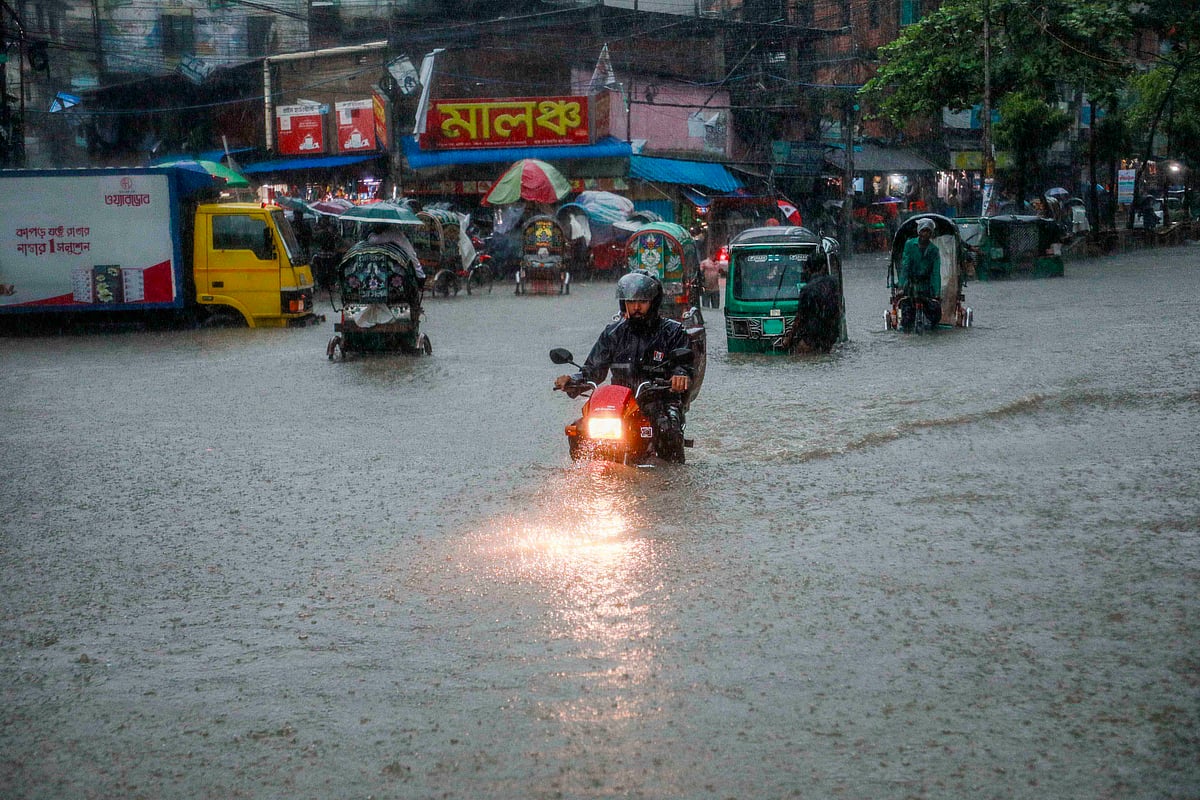
National Parliament held an unscheduled discussion on the waterlogging crisis in Chittagong, caused by heavy rainfall. Three Members of Parliament (MPs) from the region presented the dire situation. Jamaat-e-Islami MP, Shahjahan Chowdhury, stated that the entire city of Chittagong is currently submerged. The discussion took place on Wednesday during a point of order session. In response to opposition remarks, the Minister of Relief and Disaster Management, Asadul Habib Dulhu, acknowledged that widespread flooding has occurred in greater Chittagong and hilly regions due to continuous heavy rains. He announced that each affected district has been allocated 200 metric tons of rice and BDT 1 million, along with instructions for distributing packaged dry food. District commissioners will oversee the distribution in consultation with MPs. Earlier, MP Sarwar Jamal Nizam from Chittagong-13 reported that his constituency, Anwara and Karnaphuli, has been inundated by four days of rain, leading to severe hardship for residents. MP Shahjahan Chowdhury further elaborated that areas including Lohagara, Satkania, Banshkhali, Chandanaish, Potiya, Anwara, Karnaphuli, and the Finance Minister's constituency are underwater, causing immense suffering. He appealed to relevant ministers for immediate and effective measures to provide dry food to vulnerable populations, including women, children, and the elderly, and to address riverbank erosion. MP Zahirul Islam from Chittagong-16 noted that despite a project initiated in 2017 to alleviate waterlogging in Chittagong city, the problem persists after nine years, attributing it to a lack of coordination. He urged the Ministry of Relief and Disaster Management, the Ministry of Agriculture, and engineering departments to collaborate for a solution. The flooding has also submerged railway lines, halting train services on the Chittagong-Cox's Bazar route.
The flooding in Chittagong highlights critical infrastructure and governance challenges exacerbated by extreme weather events. The repeated failure to resolve persistent waterlogging, despite prior project initiatives, suggests systemic issues in urban planning, inter-agency coordination, and perhaps the long-term efficacy of implemented solutions. The reliance on emergency relief post-disaster, while necessary, points to a reactive rather than proactive approach to climate resilience. Future strategies must integrate robust climate adaptation measures, improved disaster preparedness, and transparent accountability mechanisms to ensure sustainable urban development and mitigate the impact of increasingly severe weather patterns on densely populated areas.
AI-generated to prompt reflection — not editorial opinion, not advice, not a statement of fact. How this works.