Choi Min-hee Demands Apology from Lee Byung-tae for Gwangju Uprising Insults
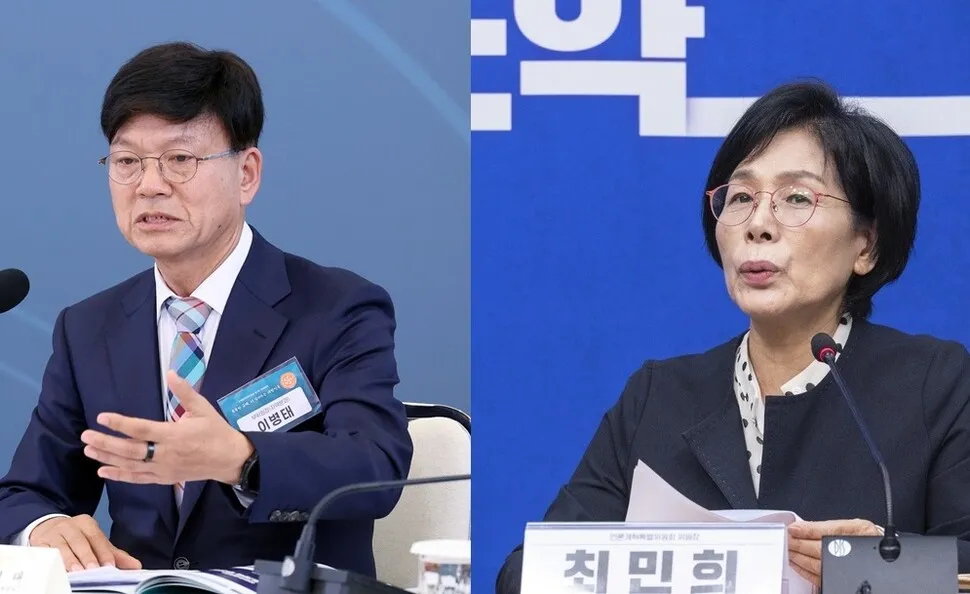
Choi Min-hee, a member of the Democratic Party, has called on Lee Byung-tae, a professor at Korea National Defense University, to apologize for disparaging remarks about the May 18th Gwangju Uprising. Lee Byung-tae had invoked the principle of freedom of expression in relation to his comments. Choi Min-hee argued that Lee's invocation of free speech was inappropriate given his past statements. She emphasized that before discussing freedom of expression, Lee should first address and apologize for his perceived insults towards the victims and the historical significance of the Gwangju Uprising. The exchange highlights ongoing debates in South Korea regarding the boundaries of free speech and historical interpretation, particularly concerning sensitive historical events.
This exchange underscores the tension between freedom of expression and the protection of historical memory, particularly concerning events like the May 18th Gwangju Uprising. While freedom of speech is a cornerstone of democratic societies, its application can be debated when it intersects with potentially harmful or revisionist interpretations of significant historical events. The differing perspectives highlight the challenge of balancing open discourse with the need to acknowledge and respect historical trauma and established historical narratives. Future discussions may need to explore clearer frameworks for addressing speech that is perceived as undermining foundational historical events, considering both legal and societal implications.
AI-generated to prompt reflection — not editorial opinion, not advice, not a statement of fact. How this works.