Christian Democracy Party Names Rogério Miranda as Senate Candidate for Roraima
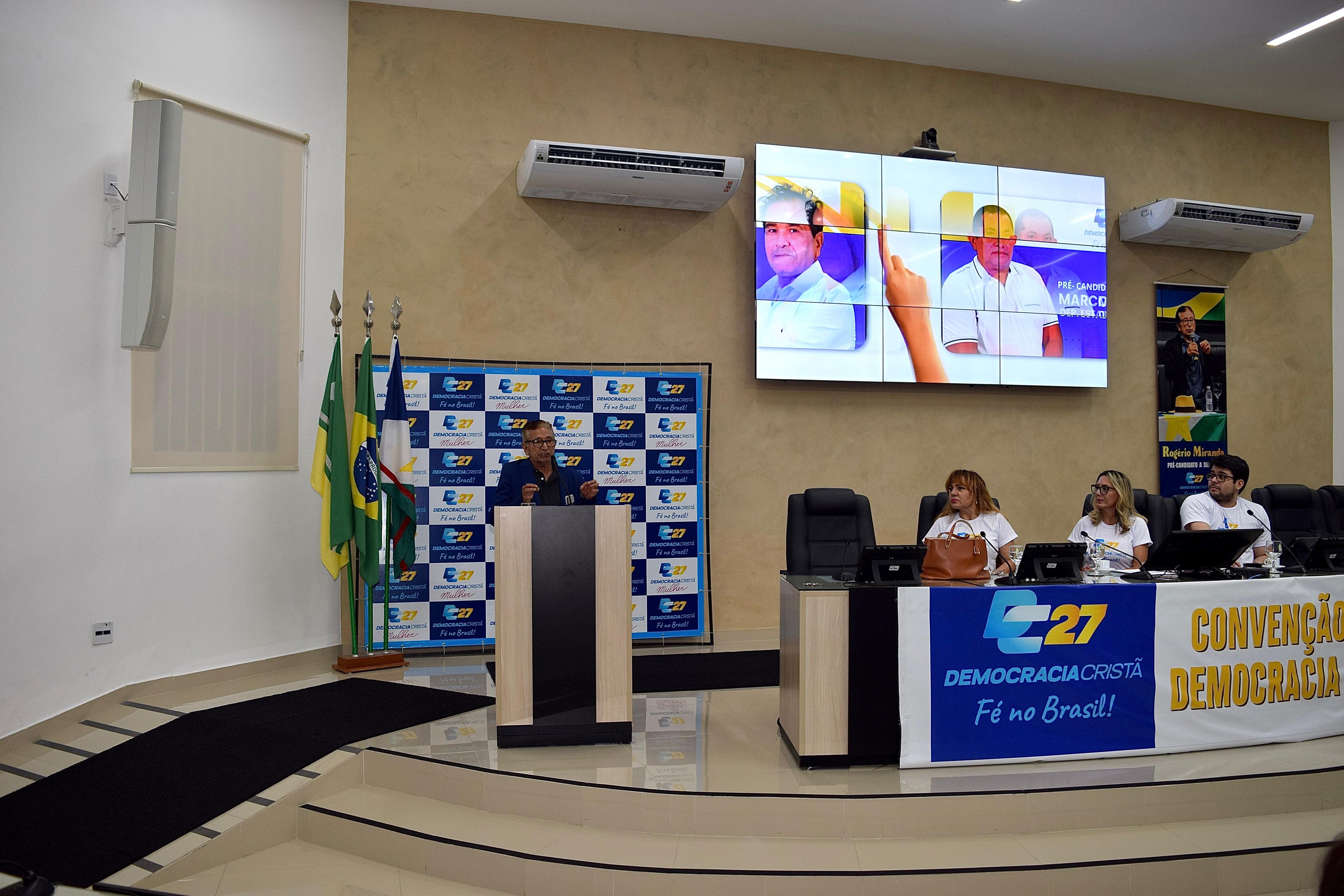
The Christian Democracy (DC) party has officially nominated Rogério Miranda as its candidate for the Senate in Roraima. This decision was finalized during the party's convention held on Monday, July 27th, at the Municipal Chamber of Boa Vista. Miranda, an entrepreneur in the metallurgy and civil construction sectors, states he holds degrees in economics and journalism. In the 2018 elections, he served as a substitute candidate for Júlio Martins of the Brazilian Labor Party (PTB). The DC party is contesting the elections without any coalition, allowing its candidates to support any gubernatorial contender. Notably, the current interim governor, Soldado Sampaio, attended the convention but did not publicly endorse Miranda. Miranda expressed strong dissatisfaction with the current state of the Brazilian judiciary, advocating for reform. He stated his intention as a senator to address the perceived political nature of the judiciary, emphasizing the need for a constitutional court. Rural producer and former Roraima vice-governor, Paulo César Justo Quartiero, has declared his support for Miranda. The deadline for party conventions to select candidates is August 5th, with registrations at the Superior Electoral Court (TSE) due by August 15th. Miranda, originally from Ubara, Ceará, moved to Roraima in 1975 and built his business career there. He aims to focus on public policies, particularly democracy and freedom of expression, if elected.
The nomination of Rogério Miranda by the Christian Democracy party highlights the strategic autonomy of smaller political entities in Brazil's multi-party system, particularly in states like Roraima. By not forming coalitions, the DC party can leverage its senatorial candidate's support to influence the broader gubernatorial race, potentially increasing its political capital. Miranda's focus on judicial reform suggests a strategy to tap into public discontent with the legal system, framing himself as an agent of change. The presence of the interim governor, without an explicit endorsement, indicates a complex political landscape where alliances are fluid and subject to negotiation. As Brazil navigates an era of increasing political polarization and evolving governance models, the ability of parties like the DC to carve out distinct platforms and influence outcomes through independent candidacies will be a key dynamic to observe over the next decade.
AI-generated to prompt reflection — not editorial opinion, not advice, not a statement of fact. How this works.