Christian Portal Recommends Evangelical Pastor Tamás Fabiny for President
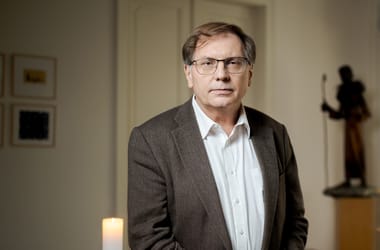
A Christian news portal has suggested that Tamás Fabiny, the former leader of the Hungarian Evangelical community, would be a suitable candidate for the position of President of Hungary. The portal, Szemlélek, believes that Fabiny's perspective and values align with what is needed in the Sándor Palace, the official residence of the President. Fabiny previously served as the presiding bishop of the Evangelical-Lutheran Church in Hungary. The recommendation highlights a perceived gap in leadership or representation that the portal believes Fabiny could fill. This endorsement suggests a desire for a particular type of leadership, possibly one rooted in religious or moral principles, to occupy the highest office in the land. The portal's assessment implies that Fabiny's past leadership roles have equipped him with the necessary qualities for the presidential office. The specific nature of his 'perspective' that would be appropriate for the Sándor Palace is not detailed, but it is presented as a positive attribute by Szemlélek. This recommendation could spark discussion within political and religious circles regarding the role of faith in public life and the qualifications deemed necessary for the presidency.
This recommendation from a Christian portal highlights a segment of society that values religious leadership in public office. The framing suggests a desire for a president whose worldview is aligned with specific Christian tenets, implying a potential critique of secular or alternative leadership styles. The analysis of Fabiny's suitability focuses on his 'perspective,' which, while not detailed, is presented as a positive attribute by the endorsing portal. This raises questions about the criteria used for presidential selection and the influence of religious organizations in political endorsements. In the context of evolving societal values and the increasing role of technology in governance, the emphasis on traditional moral or religious leadership could be seen as a response to perceived societal shifts, presenting a potential tension between established religious frameworks and the diverse needs of a modern, pluralistic state. The long-term implications involve how such endorsements might shape public discourse on the separation of church and state and the qualifications for national leadership in the coming decade.
AI-generated to prompt reflection — not editorial opinion, not advice, not a statement of fact. How this works.