Christopher Nolan's 'Oppenheimer' Fails to Reach Homeric Heights
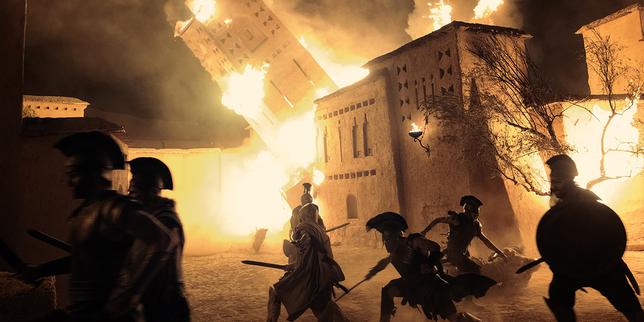
Filmmaker Christopher Nolan sought an original aesthetic to represent the epic masterpiece of antiquity in his latest work, "Oppenheimer." He employed grandiosity, a prestigious cast, and substantial resources in his attempt. However, despite these efforts, the film has not managed to convince critics or audiences of its success in capturing the essence of ancient epic poetry. Nolan's ambition to translate a timeless literary achievement into a modern cinematic experience faced significant challenges. The film's scale and star power were intended to evoke the grandeur of classical epics. Yet, the execution ultimately fell short of its lofty aspirations. The critical reception suggests a disconnect between the film's monumental production and its ability to resonate with the depth and impact of its source material. The pursuit of a unique visual style to embody the ancient epic proved elusive.
The critical reception of Christopher Nolan's "Oppenheimer" suggests a tension between cinematic ambition and the faithful representation of classical epic themes. While the film's grand scale and star-studded cast were intended to evoke antiquity's masterpieces, the outcome indicates a potential disconnect. This situation highlights the inherent difficulty in translating the narrative and thematic complexity of ancient epics into a contemporary visual medium. Future cinematic endeavors might benefit from exploring innovative narrative structures or aesthetic approaches that are more intrinsically suited to the medium, rather than attempting direct emulation of ancient literary forms. The challenge lies in finding a balance between honoring the source material's spirit and leveraging the unique capabilities of film to create a compelling, original work.
AI-generated to prompt reflection — not editorial opinion, not advice, not a statement of fact. How this works.