Christopher Nolan's 'The Odyssey' Explores War's Lingering Psychological Scars
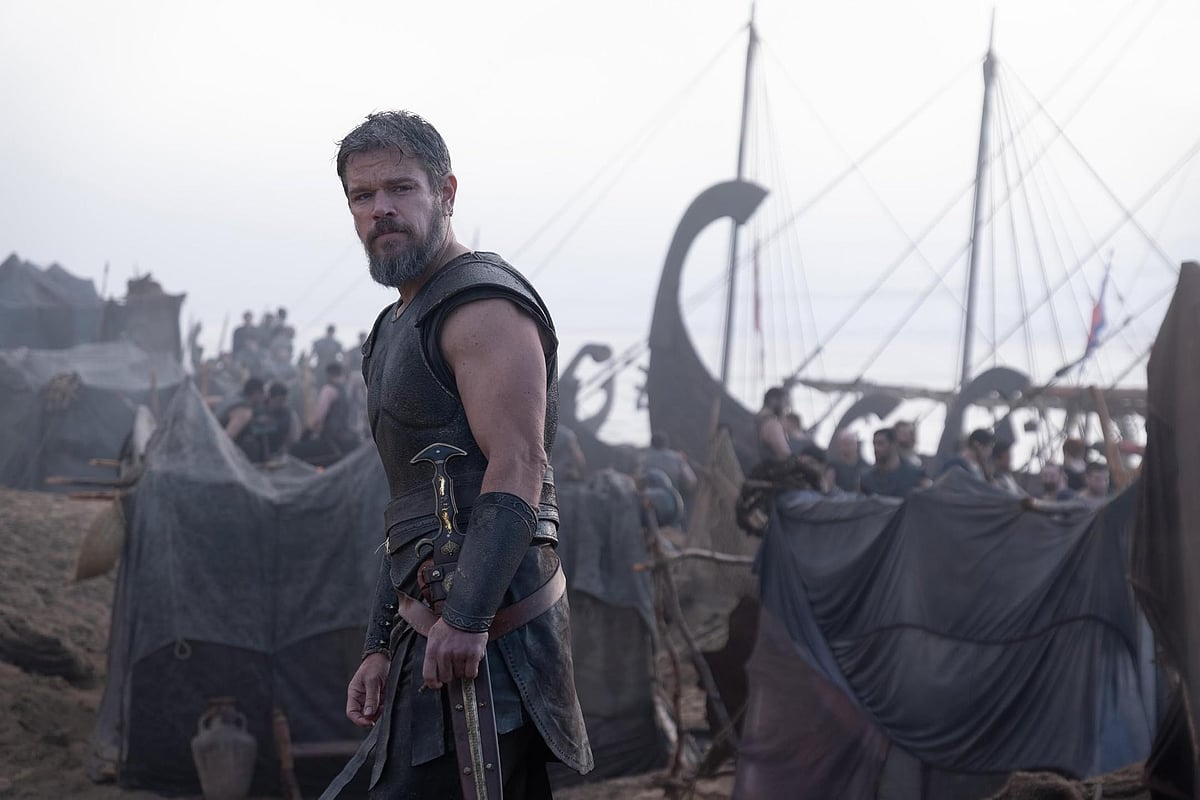
Christopher Nolan's film adaptation of Homer's 'The Odyssey,' titled 'The Odyssey,' transcends a simple epic journey to delve into the internal battles faced by soldiers after conflict. The movie portrays the victorious Greek general Odysseus, played by Matt Damon, as a man profoundly changed by the Trojan War, struggling with his identity and inner turmoil on his voyage home to his wife Penelope (Anne Hathaway) and son Telemachus (Tom Holland). Nolan uses mythological elements like gods, monsters, and sirens not just as fantasy but as potent symbols of Odysseus's psychological state, representing his memories, guilt, and anxieties. The film masterfully depicts the invisible wounds of war, akin to Post-Traumatic Stress Disorder (PTSD), showing how soldiers, though physically returning, may never fully recover mentally, and how their families also bear the burden of their experiences. The narrative also reframes the Trojan War's cause, suggesting that love was a pretext, with the true conflict stemming from power struggles and control over trade routes, grounding the epic in political and economic realities. Nolan's reinterpretation of iconic scenes, such as the Trojan Horse, highlights his skill in presenting familiar narratives in fresh ways. The performances are lauded, with Damon embodying a weary, guilt-ridden man, Hathaway offering a restrained portrayal of enduring loyalty, and Robert Pattinson delivering a menacing Antinous. Hoyte van Hoytema's cinematography transforms the sea into a character, enhancing the film's visual and emotional impact, particularly in the striking scene depicting Odysseus's descent into the underworld. Despite its complexity and occasional dramatic dialogue that might challenge some viewers, 'The Odyssey' is ultimately a profound exploration of war's lasting impact on the human psyche, suggesting that the greatest damage occurs not on the battlefield but within the individual.
This cinematic interpretation of 'The Odyssey' reframes the ancient epic through the lens of modern psychological understanding of warfare's aftermath. By focusing on the internal struggles and lingering trauma of soldiers, the film prompts reflection on the long-term societal costs of conflict beyond immediate cessation. It highlights the disconnect between the public perception of war as a heroic endeavor and the personal, often devastating, psychological toll it exacts on individuals and their families. The analysis suggests that such narratives are crucial in fostering empathy and understanding for veterans, encouraging a societal shift from glorifying combat to addressing its profound human consequences. This perspective aligns with the growing recognition of mental health as a critical component of national security and public well-being in the 21st century.
AI-generated to prompt reflection — not editorial opinion, not advice, not a statement of fact. How this works.