Christopher Nolan's 'The Odyssey' Praised for Visuals, Criticized for Star-Studded Cast
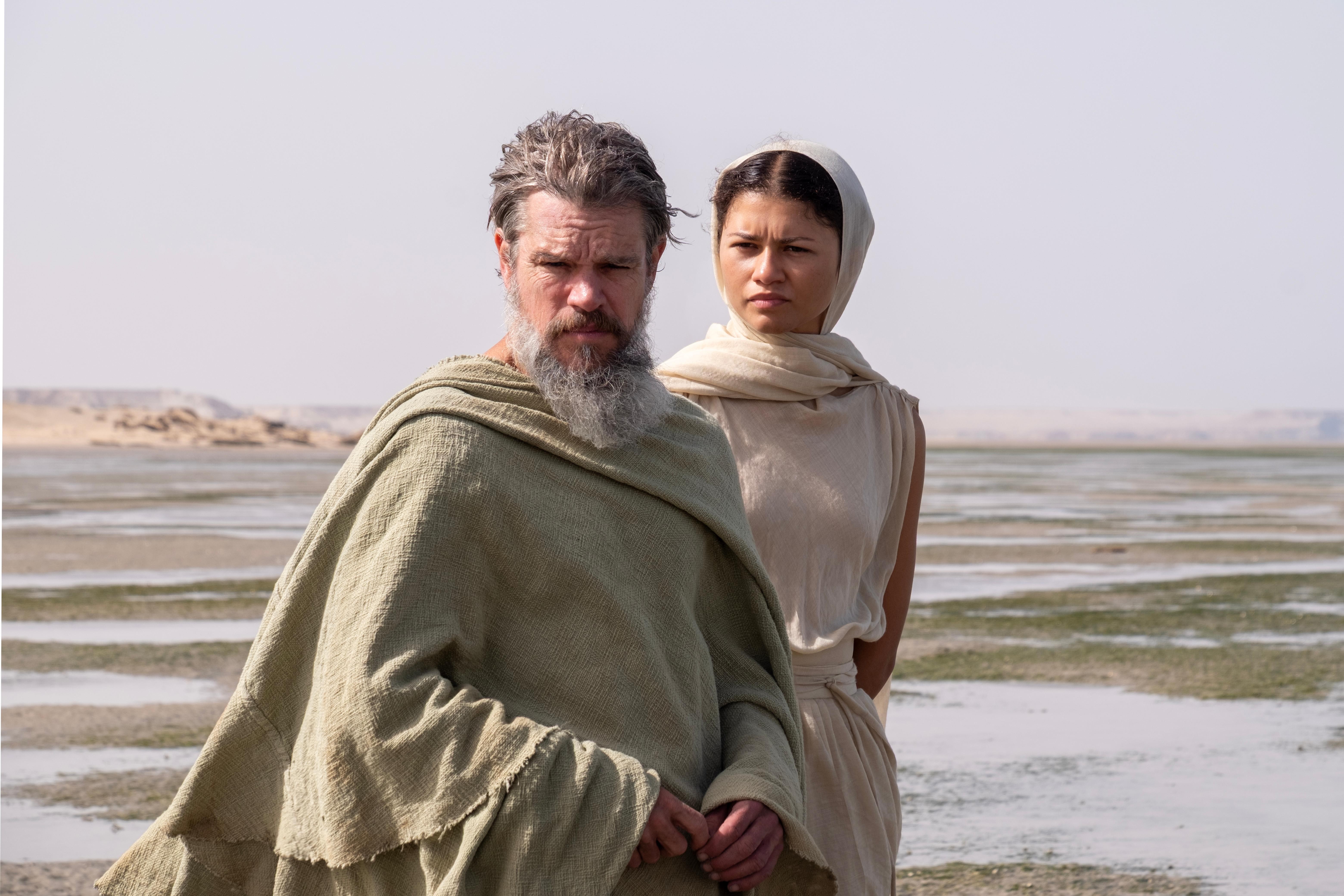
Director Christopher Nolan's adaptation of Homer's 'The Odyssey' is set to premiere in Brazil on Thursday, November 16th. The film, which runs for nearly three hours, is lauded for its stunning cinematography and powerful sound editing, creating a rare epic cinematic experience. Nolan's work attempts to balance a deep respect for the ancient poem with a contemporary humanization of its characters, bridging the gap between a nearly 3,000-year-old epic and modern sensibilities. However, the film faces criticism for its excessively star-studded cast, which reportedly hinders deeper audience connection with the characters. Actors like Matt Damon, Tom Holland, and Anne Hathaway, despite their talent, are noted for bringing their recognizable Hollywood personas to their roles, distancing the film from its ancient Greek setting. This is despite efforts to film on real locations, which are evident throughout the production. A notable exception is Robert Pattinson, whose portrayal of the villain is highlighted as a delightful performance due to the character's straightforward nature. The screenplay follows the protagonist's arduous journey home, utilizing his wit to overcome divine wrath and mythological creatures, mirroring the ingenuity that led to the Greek victory at Troy. While Nolan occasionally falters with theatrical dialogue, his skill in creating tense and suffocating atmospheres is a significant strength. The film transforms familiar mythological encounters into sequences comparable to the best horror films, with the cyclops's roars being particularly memorable. Technical aspects, including cinematography by Hoyte van Hoytema and music by Ludwig Göransson, are praised as spectacular, contributing to a near-perfect technical execution, with minor critiques on some exaggerated costume designs. Nolan's casting choices also reflect a conscious effort towards diversity, incorporating actors of various nationalities and ethnicities. The director's decision to cast Zendaya, a Black actress, as the goddess Athena is specifically mentioned as a successful move that humanizes the deity and addresses potential racism in audience reactions. Ultimately, Nolan's 'The Odyssey' is described as an imperfect yet grand reflection of its creator, showcasing a controlled magnificence.
This adaptation of 'The Odyssey' navigates the inherent challenge of translating an ancient epic into a modern blockbuster. The film's technical achievements in cinematography and sound design suggest a commitment to immersive spectacle. However, the critique regarding the overly prominent cast raises questions about the balance between commercial appeal and narrative depth. The casting of major stars, while potentially drawing audiences, can inadvertently detract from the characters' immersion, turning them into celebrity performances rather than fully realized figures. This tension between star power and character authenticity is a recurring dynamic in large-scale productions. Furthermore, Nolan's approach to diversity, particularly the casting of Zendaya as Athena, highlights evolving societal perspectives on representation in historical and mythological narratives, prompting consideration of how such choices are perceived and whether they enhance or complicate the storytelling. The film's success may ultimately hinge on its ability to leverage its grand scale and technical prowess to explore universal themes in a way that resonates beyond its star-driven facade.
AI-generated to prompt reflection — not editorial opinion, not advice, not a statement of fact. How this works.