Circular Economy Fair Held at CTC Sicoob Credisul in Vilhena
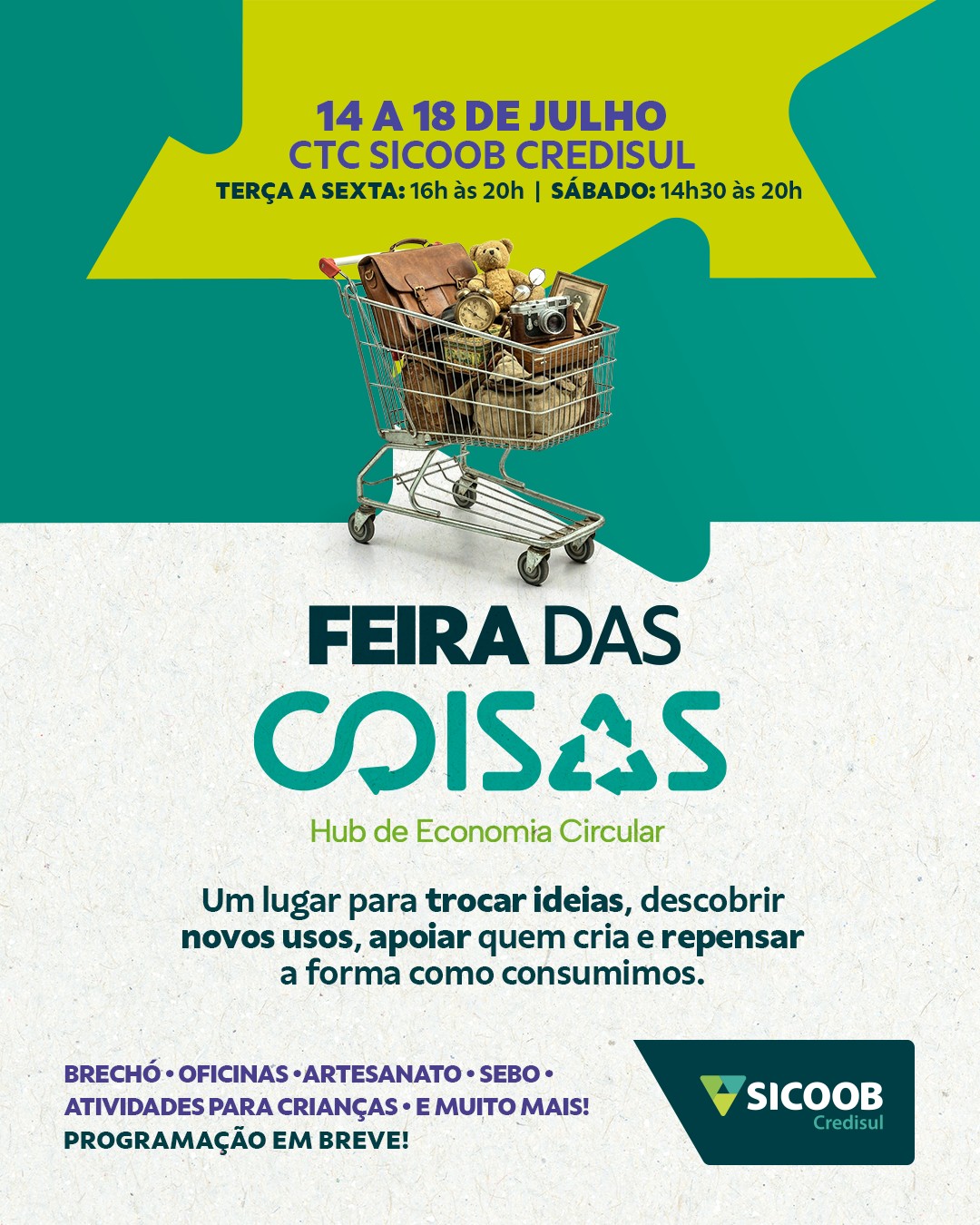
The traditional Feira das Coisas (Things Fair) is being held from July 14th to 18th at the CTC Sicoob Credisul in Vilhena, Rondônia, Brazil, with a new focus on circular economy principles. This event aims to encourage material reuse, conscious consumption, and support for local initiatives. Over five days, attendees can explore food stalls, a second-hand clothing market (brechó), a used book market (sebo), and an artisan fair. The program also includes workshops and activities designed for children. The fair will operate from 4 PM to 8 PM on weekdays and from 2:30 PM to 8 PM on Saturday. Circular economy promotes a model that contrasts with the linear 'take-make-dispose' system, emphasizing keeping products and materials in use through repair, reuse, recycling, and sharing to minimize waste and optimize resource utilization. Global data from the Circularity Gap Report 2025 indicates that only 6.9% of materials used worldwide come from secondary sources, and merely 11.2% of discarded materials are recycled. Adevania Silveira, Marketing, Citizenship, and Sustainability Manager at Sicoob Credisul, stated that the fair's purpose is to demonstrate how circular economy practices can be integrated into daily life. The initiative aligns with Sicoob Credisul's sustainability agenda, which includes actions supporting the UN's Sustainable Development Goals (ODS) and environmental preservation projects. The event features specific activities each day, including financial education for children, workshops like pottery and a 'Minichef' cooking class, and live music performances.
This event highlights a growing trend of organizations integrating sustainability principles into community outreach and operational frameworks. By focusing on a circular economy, Sicoob Credisul is promoting a paradigm shift from linear consumption to resource longevity, potentially fostering local economic resilience and environmental stewardship. The initiative's alignment with UN Sustainable Development Goals signals a broader corporate commitment to systemic change. The challenge for such events lies in translating conceptual understanding into widespread behavioral adoption, requiring ongoing engagement and accessible pathways for individuals to participate in circular practices beyond the fair's duration. Future success will depend on measuring the long-term impact of these initiatives on consumption patterns and resource management within the community.
AI-generated to prompt reflection — not editorial opinion, not advice, not a statement of fact. How this works.