Clash Erupts Between Student Wings at Begum Rokeya University
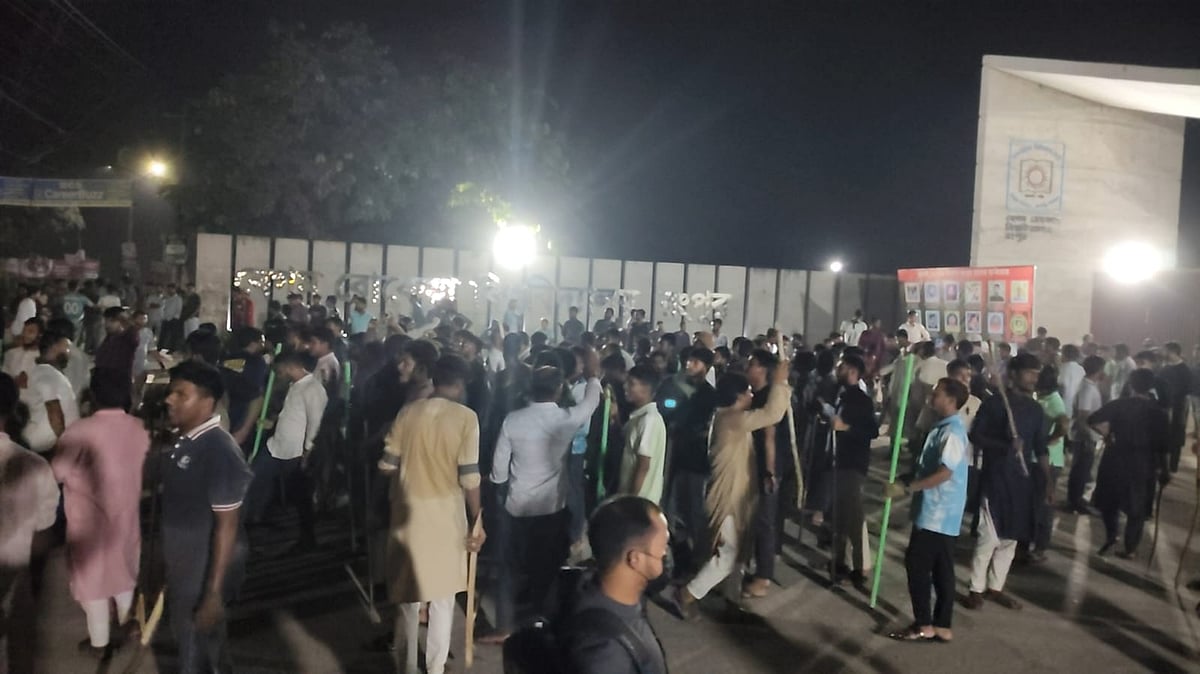
Tensions flared at Begum Rokeya University in Rangpur, Bangladesh, on Monday, August 3rd, when clashes broke out between members of the student wings of the Chhatra Dal and Chhatra Shibir. The confrontation, which began around 7:30 PM and continued late into the night, involved reciprocal chasing, stone-pelting, and the throwing of chairs, creating an atmosphere of unease on campus. The conflict originated from a Chhatra Shibir exhibition titled 'July Against Oppression in July,' which displayed images of individuals labeled as victims of 'extrajudicial killings.' Chhatra Dal members approached the exhibition and demanded the removal of a banner, leading to an initial verbal dispute. The situation escalated into physical altercations with both groups wielding sticks. Shibli Sadiq, the office secretary of Chhatra Shibir's university unit, stated that Chhatra Dal attacked them when they refused to remove the images, claiming the individuals depicted were 'razakars' and their photos should not be displayed alongside former Prime Minister Khaleda Zia. He also alleged that their president was assaulted, resulting in injuries. University Proctor Ferdous Rahman confirmed that video footage would be reviewed to identify those involved in the violence, and an investigation committee would be formed to take necessary action. According to Md. Yamin, president of the university's Chhatra Dal unit, the dispute arose over the display of photos of individuals like Golam Azam, Quader Molla, and Nizami, whom he described as anti-Liberation War figures. He accused Chhatra Shibir of bringing in outside individuals, including from Carmichael College, to attack them and asserted that Chhatra Dal would not compromise on issues related to the Liberation War or July. The Officer-in-Charge of Tajhat Police Station, Rafiqul Islam, reported that the situation was calm after police intervention and that the university's vice-chancellor was meeting with the leaders of both student groups.
The confrontation between Chhatra Dal and Chhatra Shibir at Begum Rokeya University highlights the enduring political polarization within student organizations in Bangladesh, often fueled by historical grievances and ideological differences. The dispute over historical figures and their representation underscores the sensitivity of national memory and its politicization. The university administration's response, focusing on investigation and disciplinary action, aims to restore order but may not address the underlying systemic issues that allow such conflicts to erupt. Future efforts could explore mechanisms for fostering inter-group dialogue and establishing clear protocols for managing political expression on campus to mitigate the risk of violence and ensure a stable academic environment, particularly in the context of evolving political landscapes and the increasing influence of social media in mobilizing student groups.
AI-generated to prompt reflection — not editorial opinion, not advice, not a statement of fact. How this works.
