Clashes in Azad Jammu & Kashmir Leave 9 Dead as Authorities Conduct 'Clearance' Operation
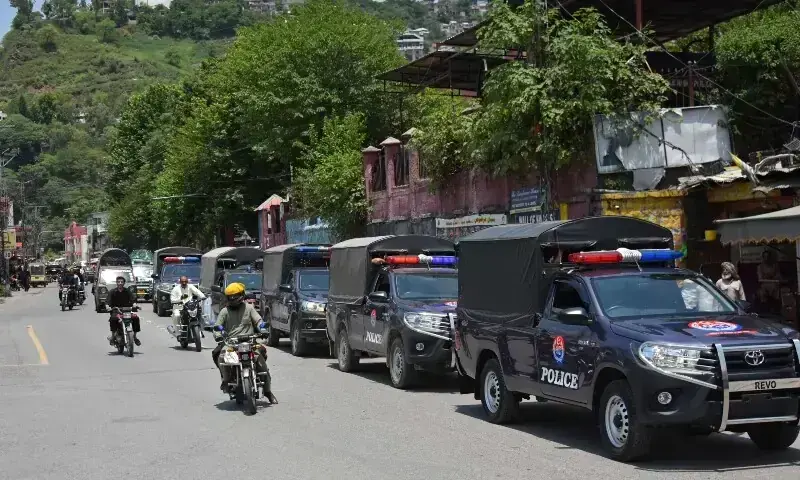
At least nine people, including two security personnel and seven activists of the Joint Awami Action Committee (JAAC), died in separate clashes in the Poonch division of Azad Jammu and Kashmir (AJK) on Tuesday. These incidents occurred as AJK authorities initiated a "clearance" operation to remove obstacles hindering the free movement of people and supplies. The clashes preceded a planned "long march" by the JAAC towards Muzaffarabad, the region's capital, which they had threatened if their demands were not met by July 14.
The first confrontation took place in Mutyalmera, near Rawalakot, where law enforcement, allegedly acting on intelligence about weapons, encountered resistance from JAAC supporters. An exchange of fire resulted in the death of one protester and one Ranger. A second, more severe clash occurred in Baloch, Sudhnoti district, when protesters allegedly pelted a law enforcement convoy with stones. This led to violent confrontations in which one policeman was martyred and at least seven protesters were killed. AJK police stated that JAAC members initiated "unprovoked and indiscriminate fire" on security personnel during the operation to reopen the Kotli-Trarkhal highway, confirming one constable's death and injuries to others.
AJK Special Home Secretary Chaudhry Guftar Hussain stated the operation would persist until all major routes were reopened, vowing to counter threats and blackmail with an "iron hand." He dismissed the JAAC's ability to disrupt the state, noting that most of the population had distanced themselves from the group. While higher education institutions and banking operations have resumed, internet services remain suspended across the region, impacting education and livelihoods. The AJK High Court is scheduled to hear petitions challenging the internet suspension.
The events in Azad Jammu and Kashmir highlight a critical tension between state authority and citizen-led demands for improved movement and access. The government's "clearance" operation, framed as a necessary measure to restore order and facilitate commerce, resulted in significant loss of life on both sides. This underscores the potential for escalation when security forces engage with organized civilian protest movements, particularly when such movements involve blockades or are perceived as threats to state control. The suspension of internet services, while presented as a consequence of disruptions, also serves as a tool to limit communication and organization among the populace, raising questions about the balance between security imperatives and fundamental rights. Future developments will likely depend on the government's ability to address the underlying grievances that fuel such protests while also managing security concerns without resorting to disproportionate force, and on the JAAC's capacity to mobilize support and articulate its demands through less confrontational means.
AI-generated to prompt reflection — not editorial opinion, not advice, not a statement of fact. How this works.