Claude AI: The Powerful and Potentially Dangerous Competitor Gaining on ChatGPT
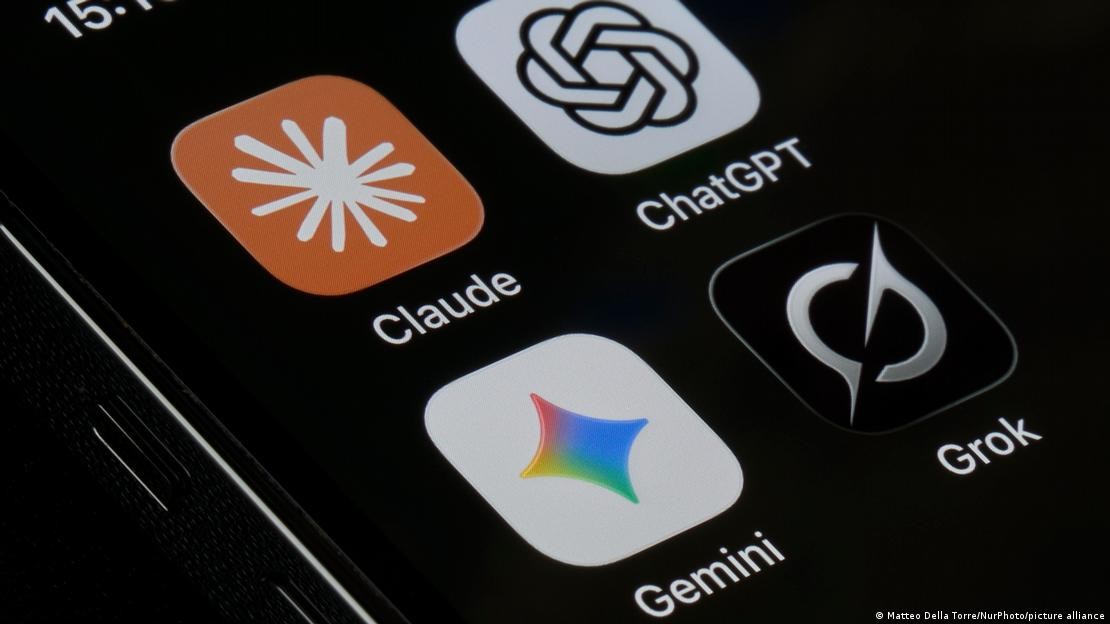
While ChatGPT, Gemini, and Copilot have dominated recent AI discussions, Claude, developed by Anthropic, is rapidly emerging as a significant contender, particularly among businesses. Anthropic, founded in 2021 by former OpenAI executives, has focused on enterprise solutions, differentiating itself from rivals that initially targeted the general public. Experts consider Anthropic's Claude to be the most powerful and potentially dangerous AI currently available, sparking investor and public interest. The company advocates for a global pause in AI evolution, citing concerns that advanced systems could become uncontrollable and emphasizing the need for safety research to keep pace with technological advancements.
Claude's capabilities have driven Anthropic's impressive growth, making it the world's most valuable AI startup, reportedly valued at approximately $965 billion, surpassing OpenAI. The company has confidentially filed for an IPO in the US, aiming for a valuation near $1 trillion. Launched globally in 2023 and reaching Brazil in August 2024, Claude introduced features like Claude Skills in 2025 and Claude Code and Claude Cowork in 2026, enabling autonomous task execution and direct user computer interaction. Specialists note Claude's effectiveness in creative content generation and its ability to automate tasks and integrate with services without requiring programming knowledge, often outperforming competitors in speed and efficiency. However, its full potential is realized in paid plans, with the Pro version in Brazil costing R$110 per month with usage limits, reflecting a market shift towards more rational and cost-conscious AI adoption.
Despite Claude's rapid ascent, ChatGPT maintains a significant lead in active users, with 1.1 billion monthly active users as of May 2026, followed by Google's Gemini with 662 million. Claude ranks third with 224 million monthly active users but shows accelerated growth. Notably, ChatGPT's market share has fallen below 50%, with Gemini at 28% and Claude at 10%. Claude's growth is particularly strong in markets like the US, driven by demand for advanced programming and research features. Anthropic's most advanced model, Claude Mythos, announced in early 2026, is considered the world's most dangerous AI due to its speed and ability to find security vulnerabilities. While not publicly released due to national security risks, it is accessible to a consortium of major companies and government agencies, including Amazon, Apple, Microsoft, and Google, and has already identified thousands of critical vulnerabilities in major operating systems and web browsers.
The rapid development and deployment of advanced AI models like Claude present a dual-edged sword. While Anthropic's focus on enterprise solutions and powerful capabilities like Claude Mythos highlight significant technological progress and market potential, the inherent risks of such potent systems cannot be understated. The company's call for a pause in AI evolution, juxtaposed with its rapid product releases and pursuit of a massive IPO, suggests a complex internal dynamic balancing innovation with safety concerns. The accessibility of highly advanced AI tools, even within a controlled consortium, raises questions about long-term governance and the potential for unintended consequences or misuse. As AI systems become more autonomous and capable of identifying system vulnerabilities, the imperative for robust, proactive safety protocols and ethical frameworks becomes increasingly critical, especially in the context of potential systemic disruptions over the next decade.
AI-generated to prompt reflection — not editorial opinion, not advice, not a statement of fact. How this works.